




David Briggs was probably the only person outside of France for whom the death of Marcel Dupré was a profoundly impactful experience at the tender age of nine. While his peers might have been more likely to hear about the deaths of prominent figures like Nikita Khrushchev or Ogden Nash, the loss of the renowned French organist probably affected few children of that age.
Improvising on keyboard instruments, whether the piano or an electro-pneumatic organ from France, was practically in Briggs' blood: His grandfather, a renowned liturgical improviser in Birmingham, was a formative influence. Briggs began improvising at the age of six and still remembers the day Dupré died. Later, musicians like Olivier Latry and Philippe Lefebvre introduced him to the French organ tradition as a constant source of inspiration.
In the year of Dupré's death, Briggs also met Pierre Cochereau, the titular organist of Notre-Dame de Paris. This meeting profoundly influenced Briggs and left a lasting impression. Such experiences later led Stephen Layton and Briggs to dedicate themselves intensively to music, and both were eventually accepted to King's College, Cambridge.
Layton focused on conducting, while Briggs established himself as an organist and composer. Although he now lives in the USA, Briggs feels such a deep connection to French culture that it is almost instinctively familiar to him. This CD represents a bridge between English and French musical culture—a musical entente cordiale.
Briggs learned a great deal from Cochereau by transcribing his improvisations in order to internalize his harmonic language. This process, while labor-intensive, was of great importance to Briggs, as it significantly broadened his musical understanding.
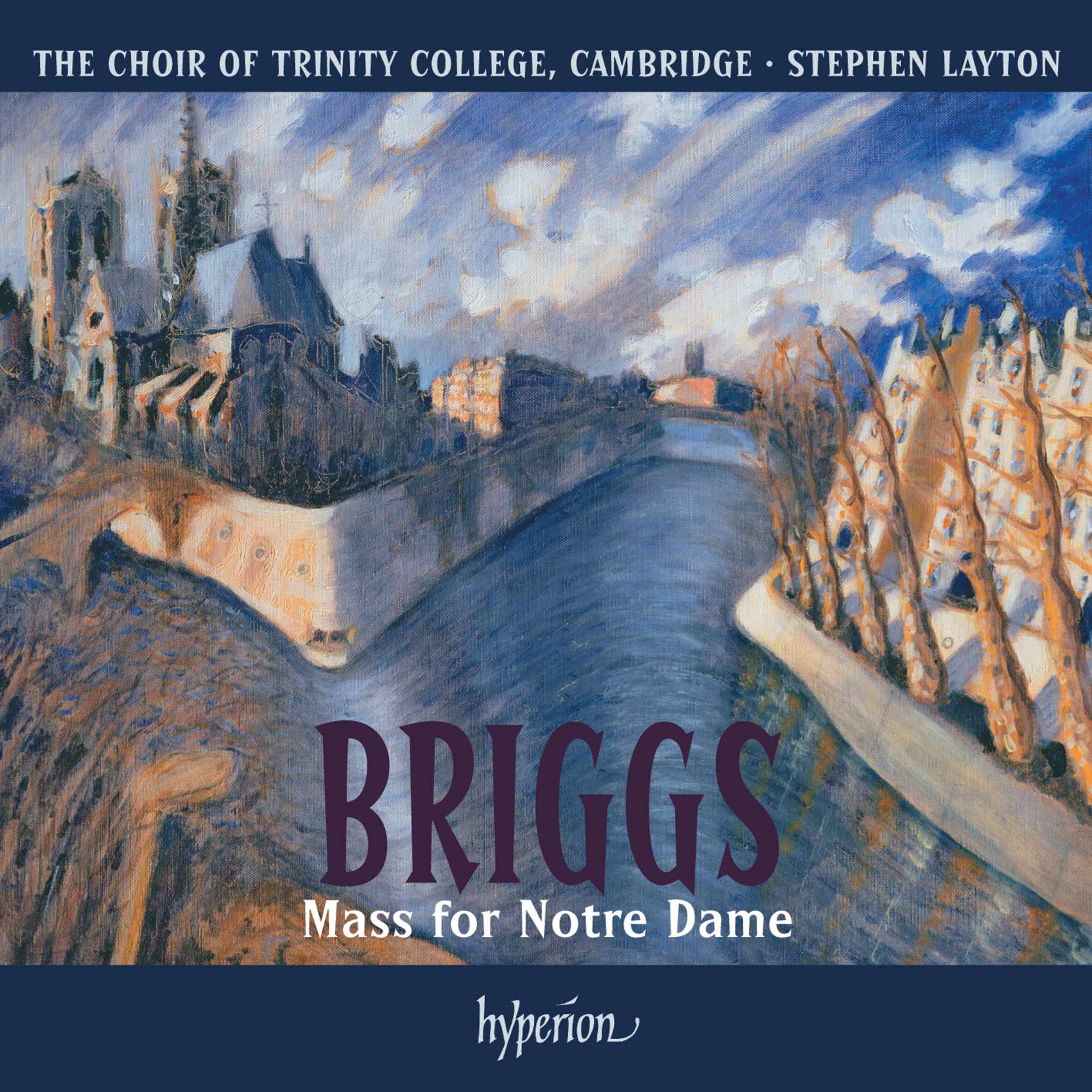
On this CD, Briggs presents the Messe pour Notre-Dame, a fusion of Cochereau's improvisational artistry and his own compositional language. The recording includes improvised pieces that skillfully reflect the atmosphere of the French liturgical organ tradition.
Briggs' music captivates with its expressive harmonies and richly textured improvisations. His works and transcriptions underscore the dialogue between different musical traditions and cultures, which is particularly evident on this CD.