




Anfang der 1970er Jahre entschied sich Alfred Schnittke für einen beinahe traditionellen Kompositionsstil, was bei vielen jungen russischen Komponisten für Bestürzung sorgte. Trotz anfänglicher Widerstände konnte er rasch eine große Anhängerschaft gewinnen und wurde weithin anerkannt. In der Sowjetunion war die Beschäftigung mit religiösen Themen tabu, dennoch fand Schnittkes Auseinandersetzung mit Religion und Gott in seiner Vierten Sinfonie einen kreativen Widerhall.
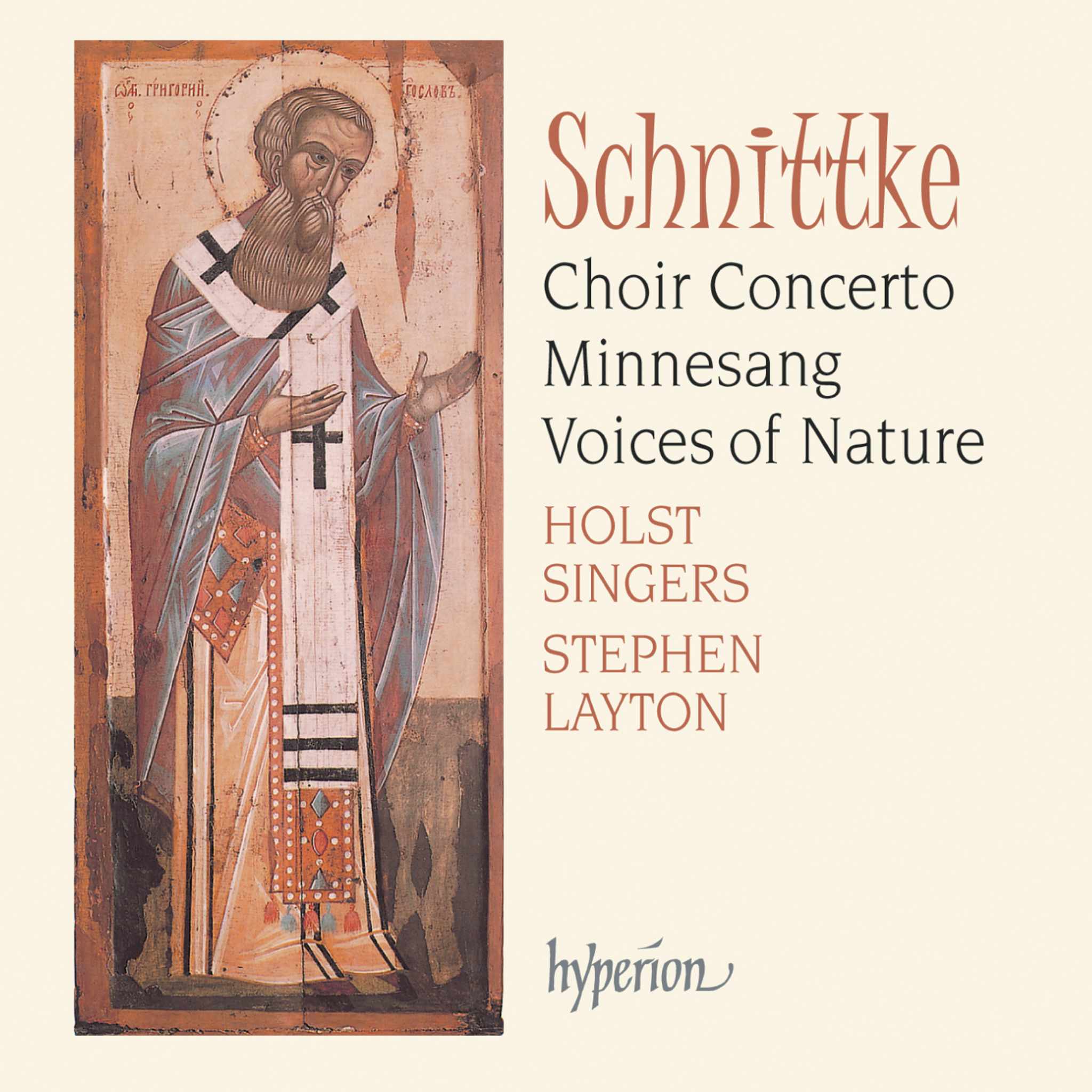
Ein Wendepunkt in seiner stilistischen Entwicklung war das 1984/85 entstandene Konzert für gemischten Chor. Grundlage dieses Werks ist das "Buch der Klagelieder" von Grigor Narekatsi. Schnittke verbindet darin traditionelle Harmonien mit seiner eigenen Ausdrucksweise. Die vier Sätze des Konzerts spiegeln jeweils unterschiedliche Themenbereiche eines Kapitels des Buchs wider.
Eine besondere Rolle spielte für Schnittke der zugrunde liegende Text, der maßgeblich die musikalische Sprache prägte. Im Konzert treten Merkmale wie diatonische Klangflächen, Dreiklangstrukturen, Imitationen und weite Intervallsprünge hervor. Die Komposition ist in ihrer Schlichtheit von traditionellen Harmonien und orthodoxen Melodieformeln getragen.
Auch Werke wie die Vokalise "Stimmen der Natur" von 1972 für Frauenstimmen und Vibraphon sowie das 1980/81 entstandene "Minnesang" für 52 Stimmen zählen zu Schnittkes wichtigsten Chorwerken. "Minnesang" verarbeitet Texte deutscher Minnesänger und unterstreicht Schnittkes Interesse an dieser germanischen Tradition.
Durch den Einsatz von übernommenem musikalischem Material erschuf Schnittke komplexe, aber dennoch verständliche Kompositionen. Seine Musik beeindruckt durch Klarheit und Ausdruckskraft, sei es in dem anspruchsvollen Konzert für gemischten Chor, der schlichten Schönheit von "Stimmen der Natur" oder dem vielschichtigen "Minnesang".