
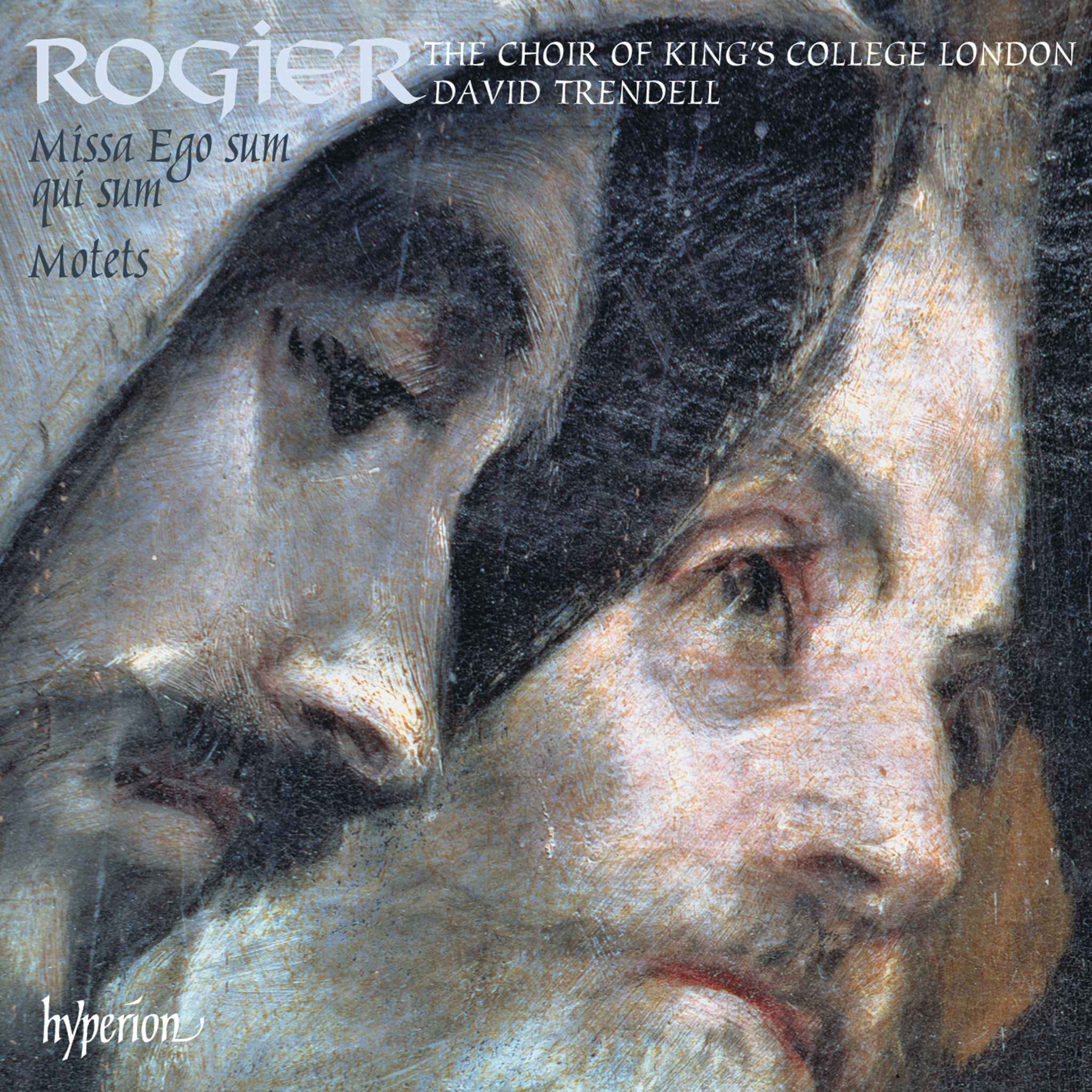

The Flemish composer Philippe Rogier lived almost exclusively in Spain, where he played a significant role at the court of Philip II and was highly acclaimed as Kapellmeister. His works were highly valued during his lifetime and remained popular even after his death in 1596. His name became particularly well-known in England after Thomas Morley likely arranged and popularized his motet 'Laboravi in gemitu meo'. Rogier was among the last representatives of the Franco-Flemish school of the late Renaissance and was admired for his versatility, emotional depth, and broad repertoire of masses, motets, and other liturgical compositions.[1][2][5]
Many of Rogier's compositions survive today through collections of masses and motets published after his death, as well as through his polychoral works, which reflect the tradition of the Spanish court. The parody mass 'Missa Ego sum qui sum', based on a motet by Nicolas Gombert, impresses with its artful use of imitation and dissonance. Rogier's music shows similarities to his Spanish predecessors, such as Victoria and Alonso Lobo, in terms of intensity and contrapuntal structure.[5]
His motets are characterized by the creative handling of dissonances and striking harmonic shifts. Works such as 'Caligaverunt oculi mei' and 'Locutus sum in lingua mea' demonstrate his pronounced expressiveness and emotional depth. Despite often somber subjects, Rogier succeeds in musically portraying human emotions with impressive melodic and harmonic diversity.