Skip to content
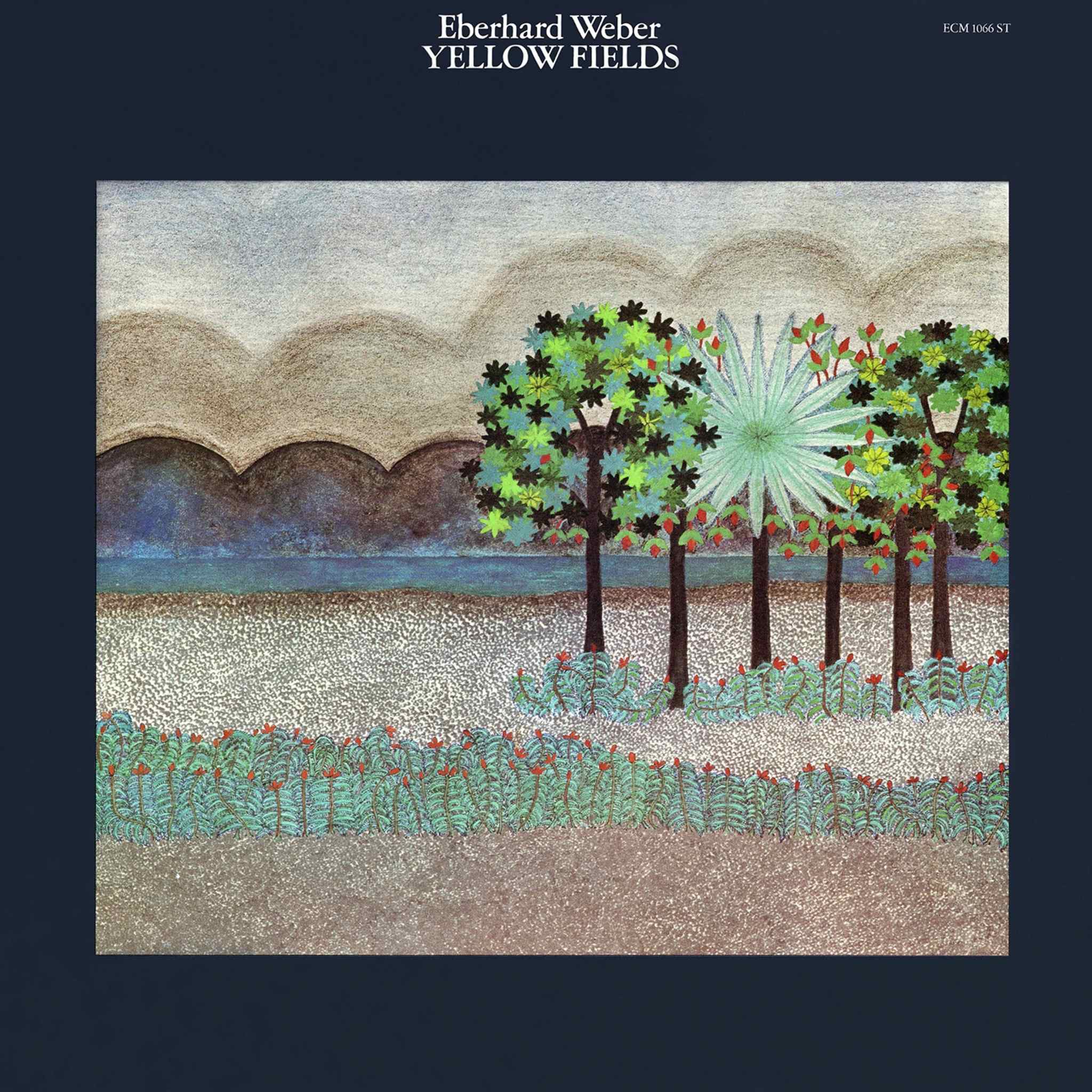
Yellow Fields

Yellow Fields

Eberhard Weber

Duration45 Min

Album insights

The Symphony No. 5 in D major by Ralph Vaughan Williams opens with the dedication "Without the permission of Jean Sibelius", being the third symphony he dedicated to a fellow composer. It premiered on June 24, 1943, conducted by Vaughan Williams himself at the Royal Albert Hall in London during one of the Henry Wood Promenade Concerts performed by the London Philharmonic Orchestra. The rest of the program was conducted by Basil Cameron as Wood was ill. Critic Denby Richards recalled Vaughan Williams telling the orchestra musicians that he was not a professional conductor but believed in the work, asking them not to focus too much on him but to just make music.

This particular symphony is the only one of Vaughan Williams' nine symphonies with no accompanying program text. Edwin Evans provided introductory notes for the premiere, which were reprinted for the second performance in October 1943 at the Royal Adelphi Theatre on the Strand in London, conducted by Cameron. The concert featured Joseph Haydn's Trumpet Concerto with the orchestra's solo trumpeter, Malcolm Arnold, as the soloist before the symphony.

With a composition period spanning from 1938 to 1943, Vaughan Williams' fifth symphony significantly differs from his previous f-minor symphony, having the smallest ensemble among all his symphonies with only two horns originally designated. While some sections allowed for horn doubling, the 1951 reprint reverted to two horns throughout. Notably, thematic similarities can be found between this symphony and Vaughan Williams' work on The Pilgrim's Progress opera, despite his earlier claim that themes were related to an unfinished opera inspired by John Bunyan's work. The symphony exhibits pentatonic and modal characteristics shared with The Pilgrim's Progress composition.

Beginning with a C pedal point in octaves by the strings, the symphony's first movement features a horn call, answered by the violins and a cantabile by the string orchestra. Following a pause at E-flat, the horn call resurfaces as the tempo progresses to allegro. A pentatonic figure by the strings introduces new woodwind motifs, building to a climax before recalling the opening material. The movement concludes with the horn call and the cantabile phrase.

The subsequent scherzo, in 3/4 time, transitions regularly between meter changes, with the strings predominantly playing with mutes and showcasing evolving themes. Woodwinds introduce new motifs alongside returning themes, ultimately shifting meter to 2/4 and 3.5/4, integrating both mutes and open strings for the finish.

Originally, the Romanza contained a quoted passage that was later omitted before publication. Commencing with six muted string chord measures, an English horn introduces the first theme, leading into a dialogue among the woodwinds, followed by an English horn theme over the strings. The dialogue resumes before combining both themes and concluding with the muted horns.

The finale, a Passacaglia, centers on a seven-bar theme, evolving into a five-bar variant with a playful tempo shift. An epilogue-like section concludes the symphony, invoking a sense of profound, attained peace.

Vaughan Williams' original undedicated dedication for the symphony stated: "Without permission and with the sincerest flattery dedicated to Jean Sibelius, whose magnificent example is worthy of all imitation." While the reasons for not seeking Sibelius' permission remain unknown, the work possibly reflects elements inspired by Sibelius amidst the wartime setting in Europe.

An intriguing connection emerges between Vaughan Williams' Symphony No. 5 and Sibelius' Symphony No. 4, with shared initial material unfolding uniquely in each composition. Scholars identify thematic parallels and structural resemblances underscoring Vaughan Williams' homage to Sibelius through this symphony.

This symphony presented a practical anomaly during its creation, with a misnoted timpani entrance fixed years later in printed editions, leading to minor harmonic discrepancies that went unnoticed for a considerable time. Despite these technical oversights, the symphony's recordings and performances, including those supervised by the composer himself, reflected the original manuscript inaccuracies.

During the symphony's wartime premiere, Vaughan Williams may have felt his ambitious Pilgrim's Progress opera project unfinished. While musical themes from both works intertwined, Vaughan Williams' refined approach to this symphony points to a mutual creative dialogue between his thematic materials and unsung operatic aspirations.

Tracking Vaughan Williams' evolving engagement with The Pilgrim's Progress, from early musical interpretations to the culmination in what he named "Morality," showcases the enduring inspiration he drew from Bunyan's text throughout his career.

Vaughan Williams navigated uncertainty and artistic refinement over decades, seeking to realize his vision linked to The Pilgrim's Progress. Ultimately, his deep-seated appreciation for the text's moral depth and his interpretive lens emphasizing goodness and beauty profoundly shaped his creative identity.