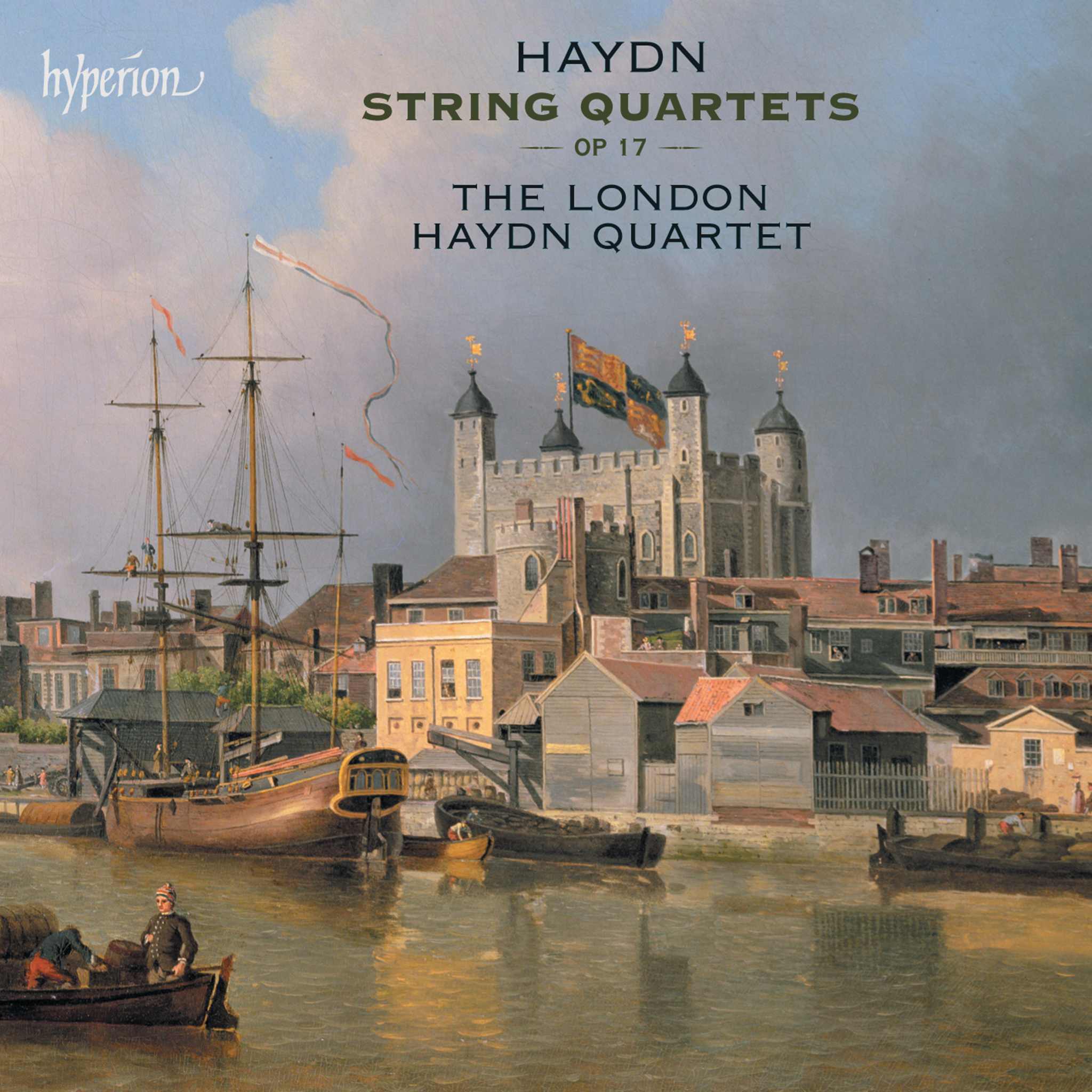
Although Haydn was stripped of the title "Father of the Symphony," his pivotal role in the development of the string quartet remains undisputed. With his works specifically tailored to the quartet, Haydn significantly shaped this genre and established it as an independent form of expression. His compositions were highly regarded and challenged the symphony's previously dominant position.
In 1796, Haydn began composing his final group of quartets, commissioned by Count Erdödy, which were eventually published in 1799 and 1800, respectively. Particularly in the London Quartets and the Quartets Op. 76, he continued his popular style, characterized by elegance, clear melodic lines, and meticulous detail.
The String Quartet in G major, Op. 76 No. 1, masterfully combines erudition with simplicity in Haydn's work. The movements develop organically, remain varied, and in the slow movement display an almost hymnal solemnity, while the minuet and finale captivate with their energy and exuberance.
In the "Quintenquartett" (Quartet of Fifths), Op. 76 No. 2, Haydn emphasizes thematic economy, utilizes fifths, and thus creates a high degree of complexity. A gentle Andante and a lively Scherzo alternate, and the finale surprises with its twists and turns and a spirited coda.
The famous "Emperor Quartet" in C major, Op. 76 No. 3, impresses with its straightforward first movement and variations on the "Emperor's Song." Here, the expressive range and the artful development of the theme in the variations become evident.
The "Sun Quartet" in B-flat major, Op. 76 No. 4, opens with an enchanting melody for the first violin over sustained chords. This thematic arabesque shapes the movement and leads to a brilliant tutti and an evocative middle section.
In the "Largo" in D major, Op. 76 No. 5, Haydn unfolds a richly varied movement structure and a deep, plaintive atmosphere. Here, poetic melancholy and subtle variation artistry intertwine.
The Quartet in E-flat major, Op. 76 No. 6, impresses with its multifaceted structure. Haydn combines variations, imaginative sections, and a cheerful scherzo into a blend of innocence and compositional sophistication.
In Haydn's Quartet in E-flat major, No. 6, pastoral and imaginative moments alternate. The Allegretto presents a series of variations on a simple theme, followed by a double fugue with original counterpoint. The movement “Fantasia” ends in a rhapsodic soundscape, and the finale impresses with rhythmic variations and a palpable sense of playfulness.
The finale is a captivating piece.


