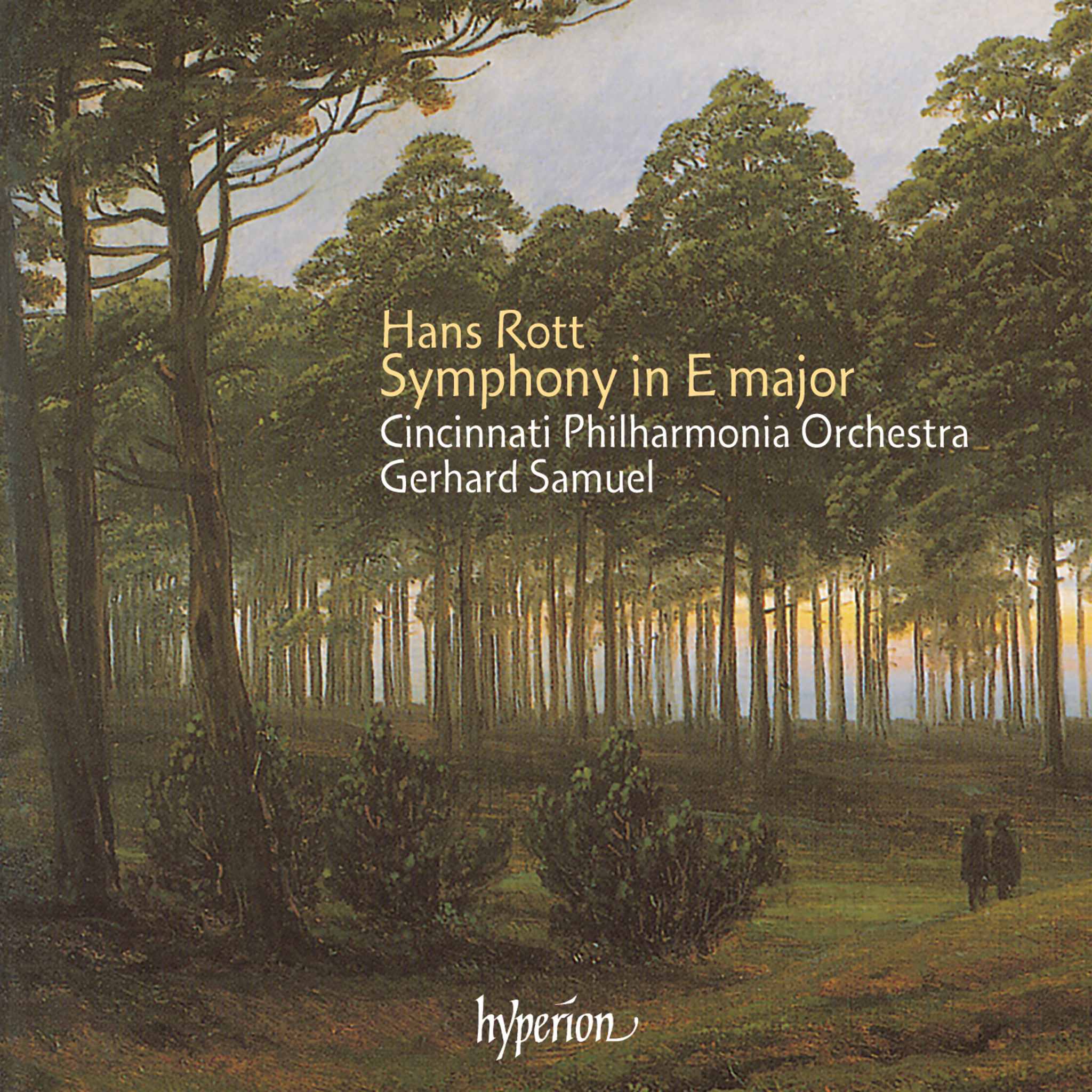
Gerhard Samuel: A Maestro's Journey and His Interpretation of Hans Rott's Symphony No. 1 in E Major
Background
Gerhard Samuel (1924–2008), born in Bonn, Germany, was an esteemed conductor and composer who left a significant mark on the American classical music scene. Samuel immigrated to the United States in 1939 to escape the Nazi regime. His early studies included violin and conducting at the Eastman School of Music, followed by a master’s in music at Yale University, where he studied under Paul Hindemith. He further honed his skills with Serge Koussevitzky at Tanglewood.
Career Highlights
Samuel's career was marked by several major roles. He served as a violinist and associate conductor with the Minneapolis Symphony Orchestra for a decade. He also made significant contributions in San Francisco and Los Angeles as a conductor and composer, including work with the Los Angeles Philharmonic in the 1970s. Samuel taught at the California Institute of the Arts for four years starting in 1972, and from 1976, he held a significant role at the University of Cincinnati College-Conservatory of Music (CCM), where he had a major impact on the Cincinnati Philharmonia Orchestra.
Championing Contemporary and Rediscovered Works
Samuel was known for his passion for contemporary music and championing overlooked repertoire. He composed for ballet, orchestra, chamber ensembles, and voice, with works described as expressive and elegant. His leadership at CCM resulted in groundbreaking performances and recordings, notably bringing Hans Rott’s Symphony No. 1 in E Major to wider recognition, both in live performance at the 1989 Mahler Festival and through a distinctive recording with the Cincinnati Philharmonia Orchestra.