Skip to content
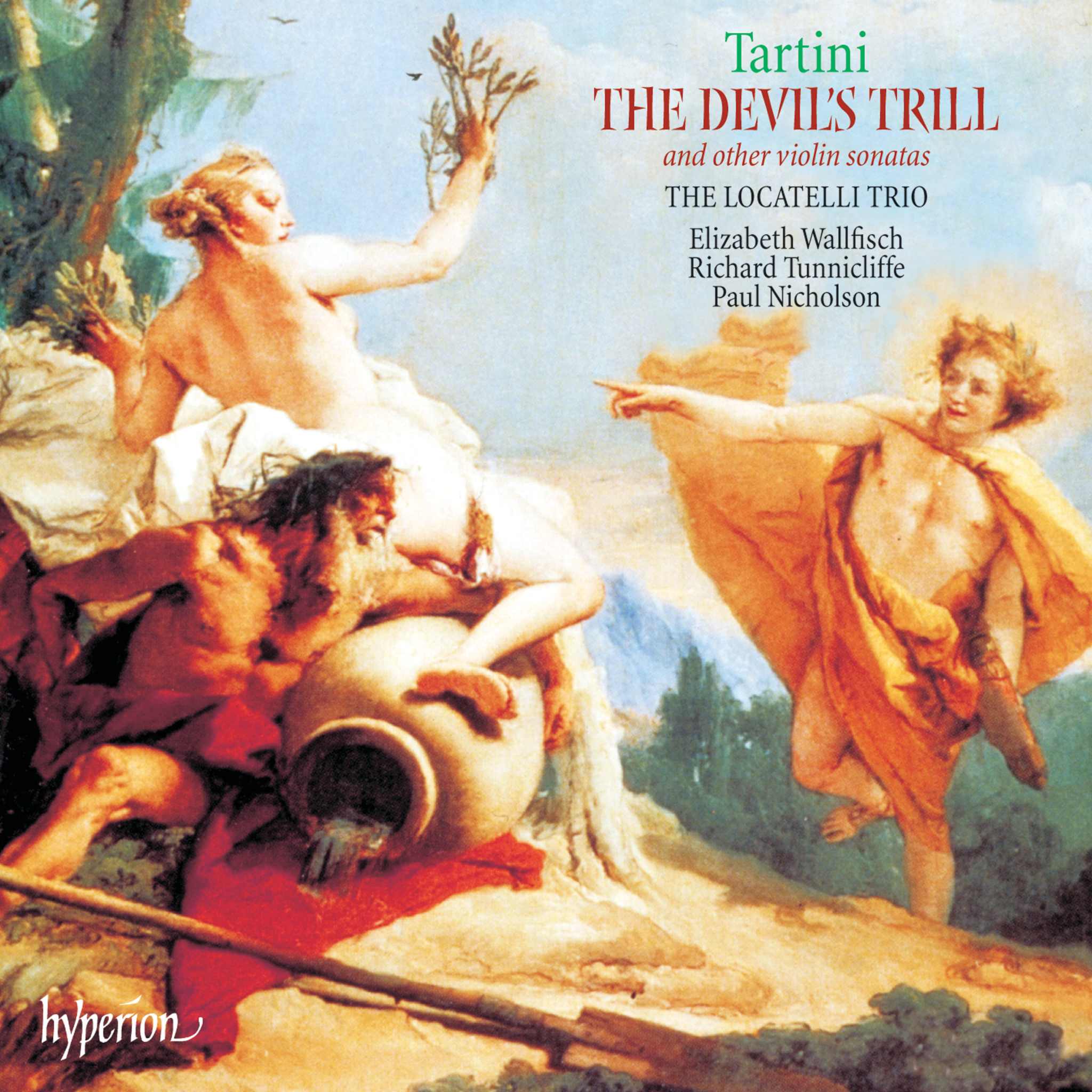
Tartini: The Devil's Trill & Other Violin Sonatas

Tartini: The Devil's Trill & Other Violin Sonatas

The Locatelli Trio

Duration141 Min

Giuseppe Tartini was born on April 8, 1692, in Pirano, Venice (now Piran, Italy), and died on February 26, 1770, in Padua, Italy. Originally, he was expected to pursue a religious career, according to his parents' wishes. However, in 1709 he began studying law at the University of Padua, though he spent much of his time fencing. His marriage in 1710 to Elisabetha Premazore, who was of lower social standing, led to conflicts with his family and the Church, forcing him to flee to Assisi. There, he stayed for about three years at the Monastery of San Francesco, devoting himself intensively to playing the violin and presumably also to composition studies with Bohuslav Matěj Černohorský.

After 1714, Tartini worked as an orchestral musician in Assisi and at the theater in Ancona. In 1721, he was entrusted with the direction of the orchestra of the Basilica of St. Anthony in Padua. This position allowed him numerous travels, including to Prague, where he attended the coronation of Charles VI. After returning to Padua, Tartini founded a prestigious music school that attracted students from all over Europe. Pietro Nardini became his most famous pupil. During the 1750s and 1760s, Tartini published several treatises on music theory, some of which provoked fierce criticism. This hostility weighed heavily on him in his later years.

As one of the most prolific composers of his time, Tartini left behind over 100 violin sonatas and numerous violin concertos. Due to the limited publishing landscape in Italy, many of his works were published abroad. His most famous composition is the "Devil's Trill Sonata," a name that only became common in the 19th century. Tartini's musical style evolved significantly over the years; his later works are characterized by modern harmonies and virtuosic passages. Drama and expressiveness characterize titles like "Didone abbandonata". Tartini's music influenced later composers, including Paganini.