





Michael Tippett, born in London in 1905, spent his childhood in Suffolk, a time of affluence but also of difficult experiences.[3][5] The First World War and traumatic experiences during his school years left their mark on his development. As a young man, he consciously defied societal norms with his homosexuality, pacifism, and left-wing views.[4]
Tippett began his musical studies at the Royal College of Music in London in 1923, after his parents finally granted him permission after much hesitation.[1][2][3][5] There, he devoted himself to violin, piano, and composition, showing a particular interest in counterpoint and being influenced by teachers such as Charles Wood, C. H. Kitson, and R. O. Morris.[1][5] After completing his studies, he initially continued working as a music and French teacher before focusing entirely on composition and exploring various musical approaches.[1][5] He withdrew earlier works, but in 1935, with a string quartet, his compositions first began to take on a distinctive style.[1][5]
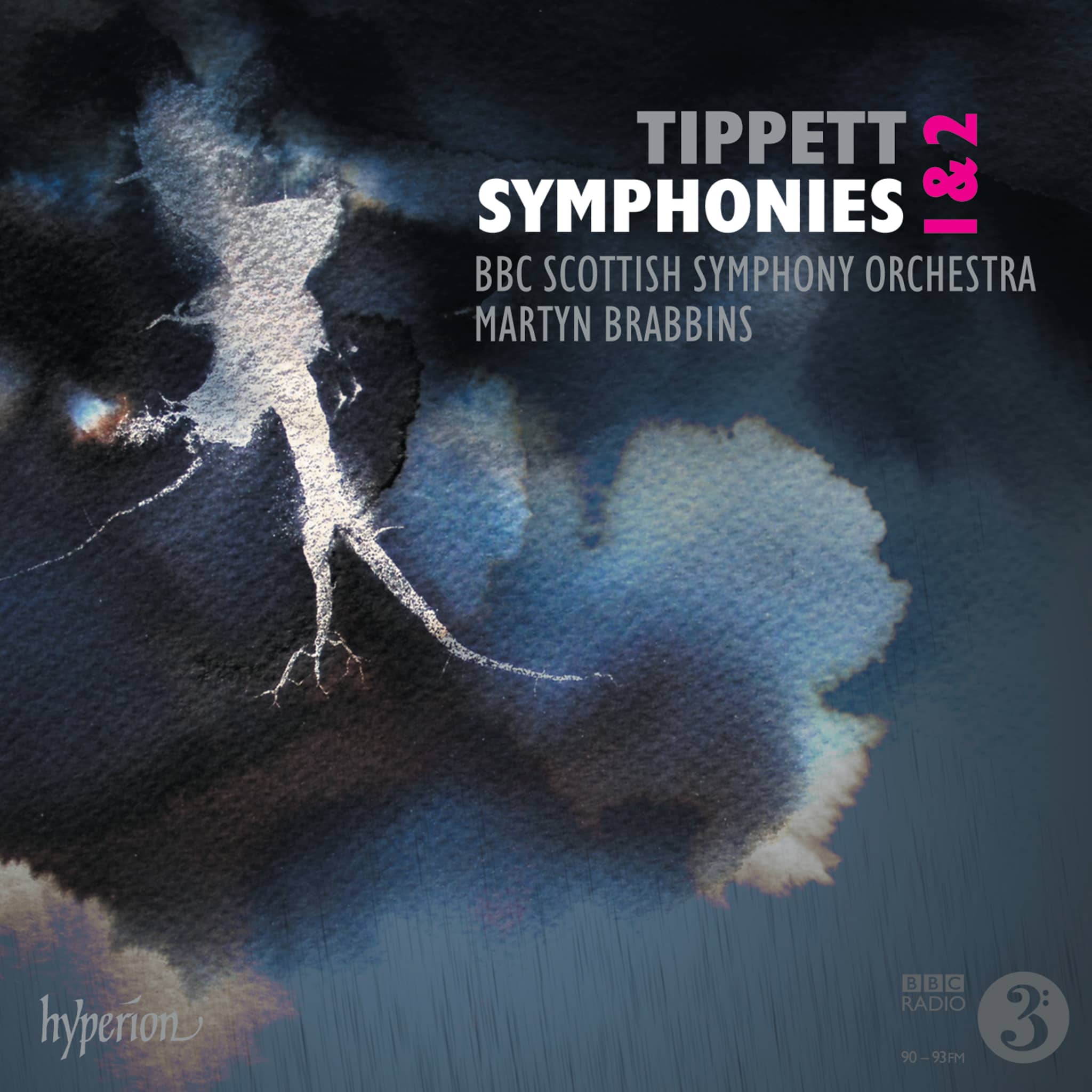
Just before the outbreak of the Second World War, Tippett began work on his first symphony, which he conceived while imprisoned in Wormwood Scrubs.[4] His aim was to create a powerful and challenging symphony, drawing inspiration from Beethoven. Through rigorous contrapuntal work and an expressive Adagio, he created a work that also revealed influences of Sibelius. The finale provided a dramatic conclusion, while the symphony as a whole represented an engagement with musical tradition.
The premiere of Symphony No. 1 was rather unremarkable, and Tippett's reputation suffered a temporary setback. It was not until eleven years later that he composed his second symphony, characterized by festivity and renewal. With its four-movement structure, it revealed Tippett's shift towards a more mature, expressive musical language, with each movement conveying its own distinct mood and the work distinguished by its rhythmic energy and richly colored sounds.
Tippett's symphonies mark significant milestones in his compositional career. Despite setbacks and misunderstandings, he succeeded in realizing his musical vision in characteristic works such as the Second Symphony.