
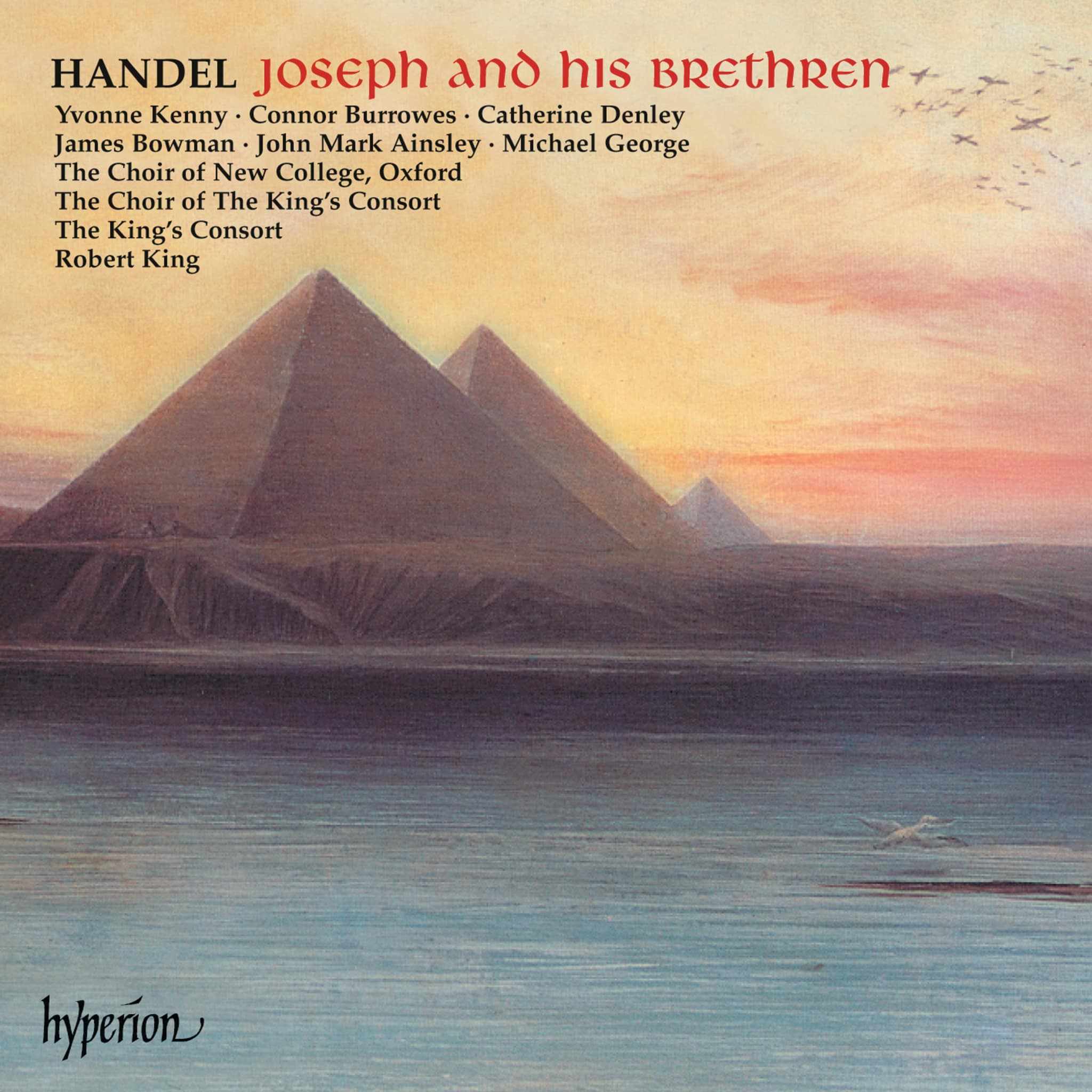




Handel composed his most impressive oratorios within six years after 1739. First came Saul, followed by Israel in Egypt and the Ode for the Feast of Saint Cecilia in 1739. The following year saw the composition of L'Allegro, il Penseroso ed il Moderato, Messiah in 1742, and Samson in 1743. Semele and Joseph and His Brothers were written in 1744, followed by Heracles and Belshazzar the next year. Although Joseph was once very popular, it unjustly fell into obscurity over time, while Heracles also received less attention. Immediately after its premiere in March 1744, Handel was able to set aside 250 pounds. The work, with revisions, was performed several times in 1745, 1747, 1755, and 1757.
Semele and Joseph and His Brothers were composed in 1744, followed by Heracles and Belshazzar the following year. Upon first hearing the work, the Count of Egmont was deeply moved and described it as an "unparalleled composition." Mrs. Delaney, a devoted admirer of Handel, also reported a positive response from the audience and considered the possibility of a second Handel subscription. Despite difficulties during rehearsals and reports of Handel's mood swings, which Mrs. Delaney mentioned, the premiere on March 2, 1744, at Covent Garden Opera House proved a resounding success. The soloists included Daniel Sullivan as Joseph, Elisabeth Duparc as Asenath, and John Beard in a dual role, supported by other talented singers.
In the four revivals between 1745 and 1757, roles were reworked, resulting in new arias and transpositions. Some changes to the score, particularly to the recitatives attributed to Joseph, led to some confusion. Twentieth-century scholars have been considered unfair to "Joseph and His Brothers." In Dean's treatise on Handel's dramatic oratorios, it is claimed that this work is among the most problematic. Winton Dean criticizes the libretto while emphasizing Handel's qualities in the arias and choruses. The prison scenes, in particular, are theatrical and moving, the recitatives and accompanied parts are characterized by vibrant harmonies, and the composition for the young Benjamin is extraordinarily poignant.