
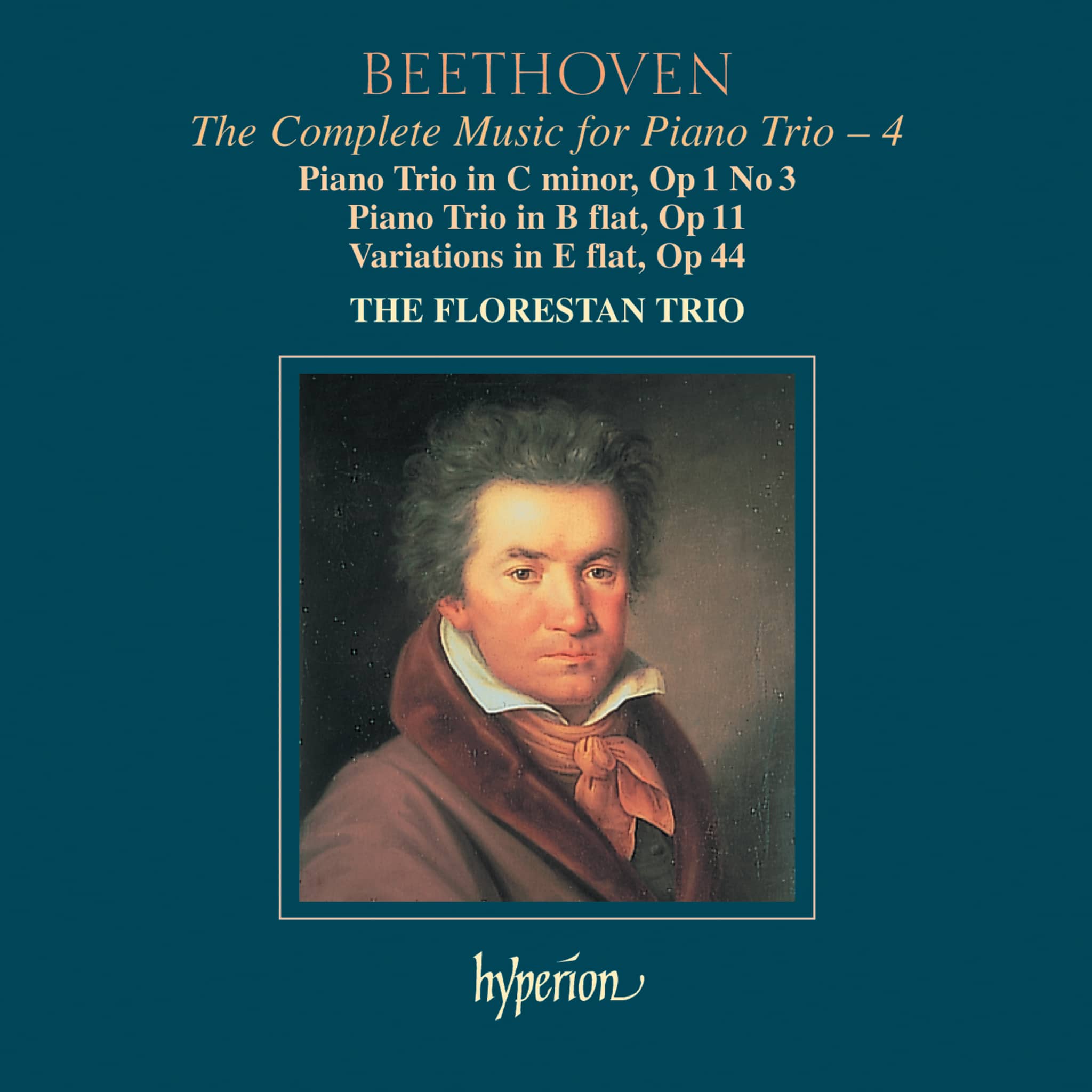




At the age of 21, in November 1792, Beethoven left his hometown of Bonn and traveled to Vienna, where he hoped to further his composition studies under Haydn's tutelage. Vienna, the center of musical life at the time, attracted Beethoven not only because of Haydn's prestige but also because it offered him the opportunity to develop his skills as a composer and virtuoso. Upon his arrival, Beethoven quickly became known in Viennese salons for his impressive piano improvisations. Prince Lichnowsky, himself an enthusiastic pianist and host of his own string quartet, was a particularly strong supporter of Beethoven in Vienna.
In late summer 1795—probably in August or September—Beethoven presented his three piano trios, Opus 1, to a social gathering and dedicated them to Lichnowsky. With these works, he aimed to impress the city's musical scene and challenge established notions about the piano trio. The trios were characterized by complex structures and expressive musical dialectics, with the C minor trio being particularly noteworthy. Haydn was impressed by the first two trios but rather surprised by the C minor trio. Over time, this work became a popular piece of chamber music. The music was characterized by sudden contrasts and heroic gestures, foreshadowing Beethoven's later compositional style.
With Variations on a Motif from an Opera by Dittersdorf and the Piano Trio in B-flat major, Beethoven responded to contemporary musical trends. The Variations on a Motif from an Opera by Dittersdorf, Opus 44, was based on a song from a Singspiel, while the Trio in B-flat major was written in only three movements to facilitate sales. Despite initial reservations, this work gradually gained recognition.
Beethoven's creative innovation and his drive to experiment are reflected in his compositions, which not only ushered in a new era of music but also challenged existing conventions.