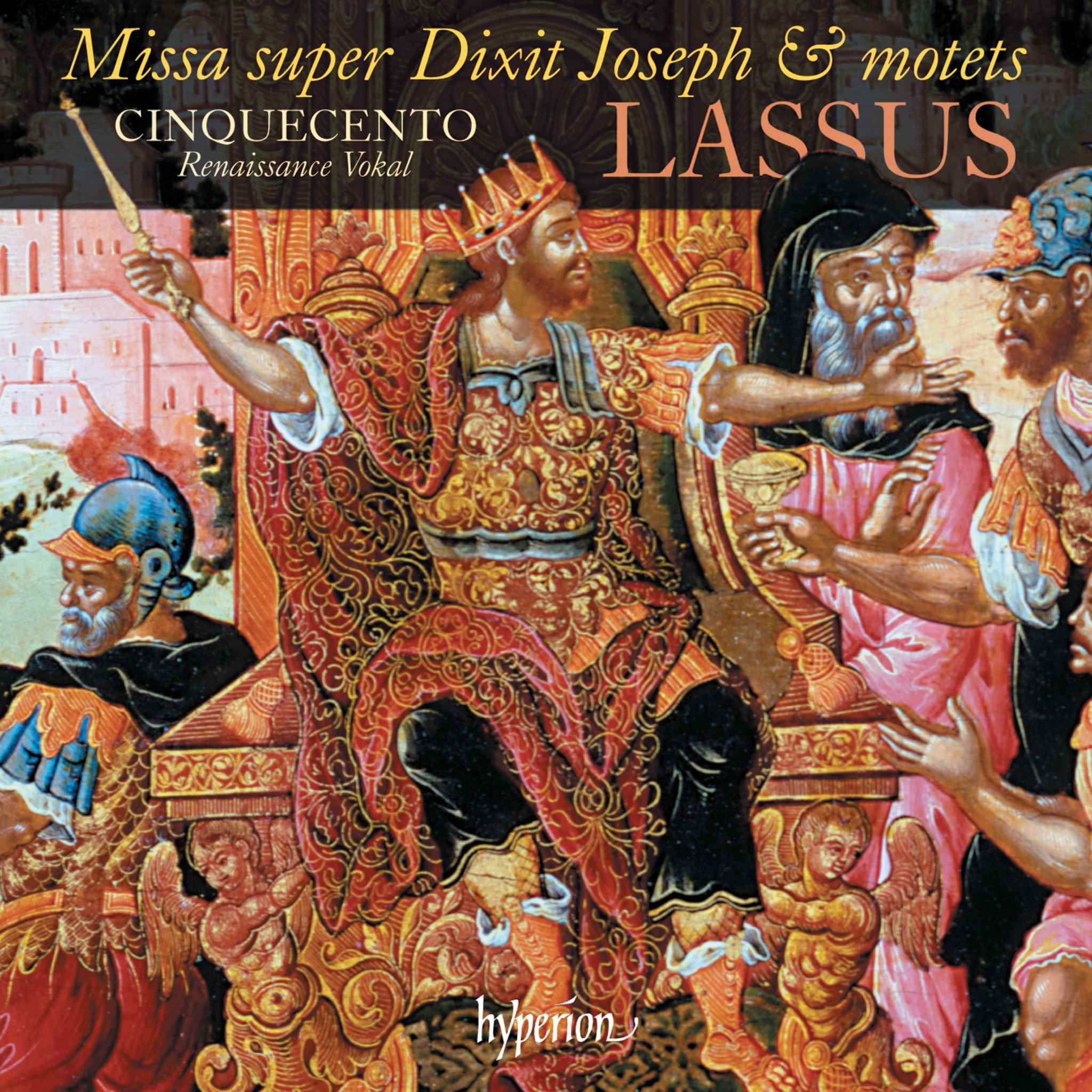
Orlando di Lasso, a respected singer and court composer and Kapellmeister to the Bavarian dukes Albrecht V and Wilhelm V, composed approximately seventy masses. Lasso's Missa super Dixit Joseph is a so-called parody mass, based on the motet Dixit Joseph undecim fratribus suis, which was first printed in 1564.[1][2] In the 16th century, it was quite common to use existing works as models for new masses. Lasso not only employed this practice with masses but also used the Magnificat and Nunc dimittis in a similar manner. The parody technique served less to save time and more to open up diverse possibilities for creative transformations.
Michael Praetorius particularly valued Lasso's artistry in motet composition. He emphasized Lasso's individual approach to setting texts to music and advocated for the combination of different compositional styles. Praetorius described the alternating juxtaposition of festive and lively sections as typical of motets, used to create expression and variety. Lasso's motet Timor et tremor exemplifies this juxtaposition through the contrast between solemn and lively passages.[2]
Carl Proske praised Lasso's motet In me transierunt irae tuae as a well-conceived and expressive composition. Proske found the sonic contrasts in Lasso's music particularly effective in conveying emotions. Lasso's handling of the text is also evident in works such as O mors, quam amara est and Deus, qui sedes super thronum, in which he deliberately employs musical contrasts and timbres.
The success of Lasso's music is documented in works such as Si bona suscepimus and Deus, canticum novum. His pieces published in the Nuremberg Motet Book enjoyed widespread popularity and were printed many times. The creative interpretation of diverse texts deeply impressed contemporaries such as Johannes Kepler and Joachim Burmeister.
Along with Palestrina, Orlando di Lasso is considered one of the most influential composers of his era. The versatility of his work and his mastery of various musical genres remain remarkable to this day. His handling of compositional techniques and the interpretation of texts also continues to fascinate.


