
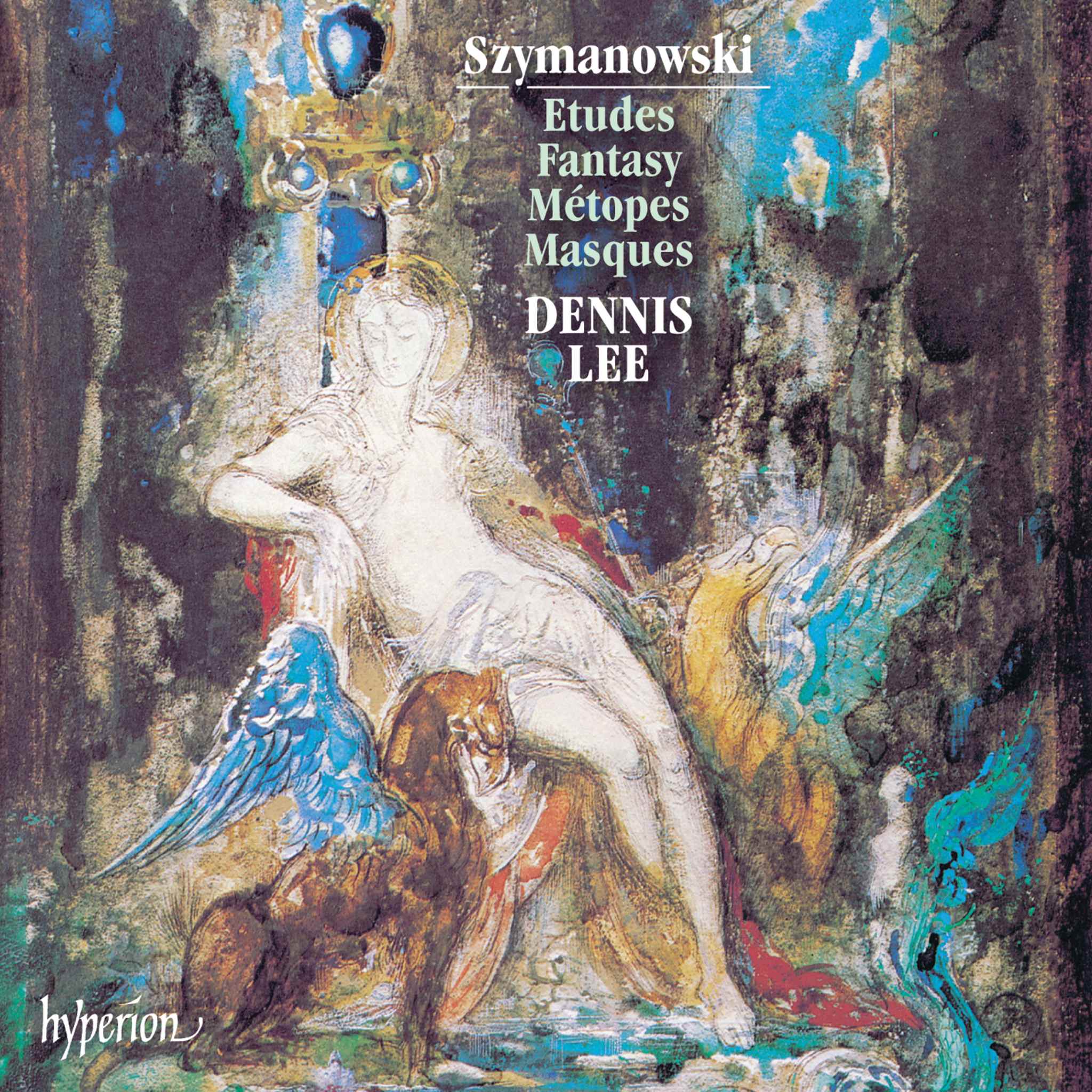

Shortly before Rubinstein's concert, Karol Szymanowski expressed to the pianist his wish for a place where he could remain unseen. Although Szymanowski had to find a new artistic direction outside of Poland, his exceptional position as a composer is now gaining increasing recognition. His works transcend German, French, and Eastern European influences, creating a unique sound world imbued with mysticism and passion.
The Four Etudes, Opus 4, clearly reflect the inspirations of Chopin, Brahms, and Wagner. Szymanowski's artistic development can be traced through established stylistic movements. The Liszt-influenced Fantasy, Opus 14, showcases his complex structures and high virtuosity.
With the three tone poems of the Métopes series from 1915, Szymanowski began to move toward a more impressionistic style. Each of these pieces references the Odyssey and is rich in mythological motifs. The influence of Debussy and Ravel is unmistakable.
The short piano pieces "Masques," composed in 1915/16, reflect the complexity of the narrative. In works such as "Tantris the Clown," a humorous take on the Tristan story, and the "Serenade of Don Juan," Szymanowski explores new expressive possibilities, with bitonal harmony playing a central role.