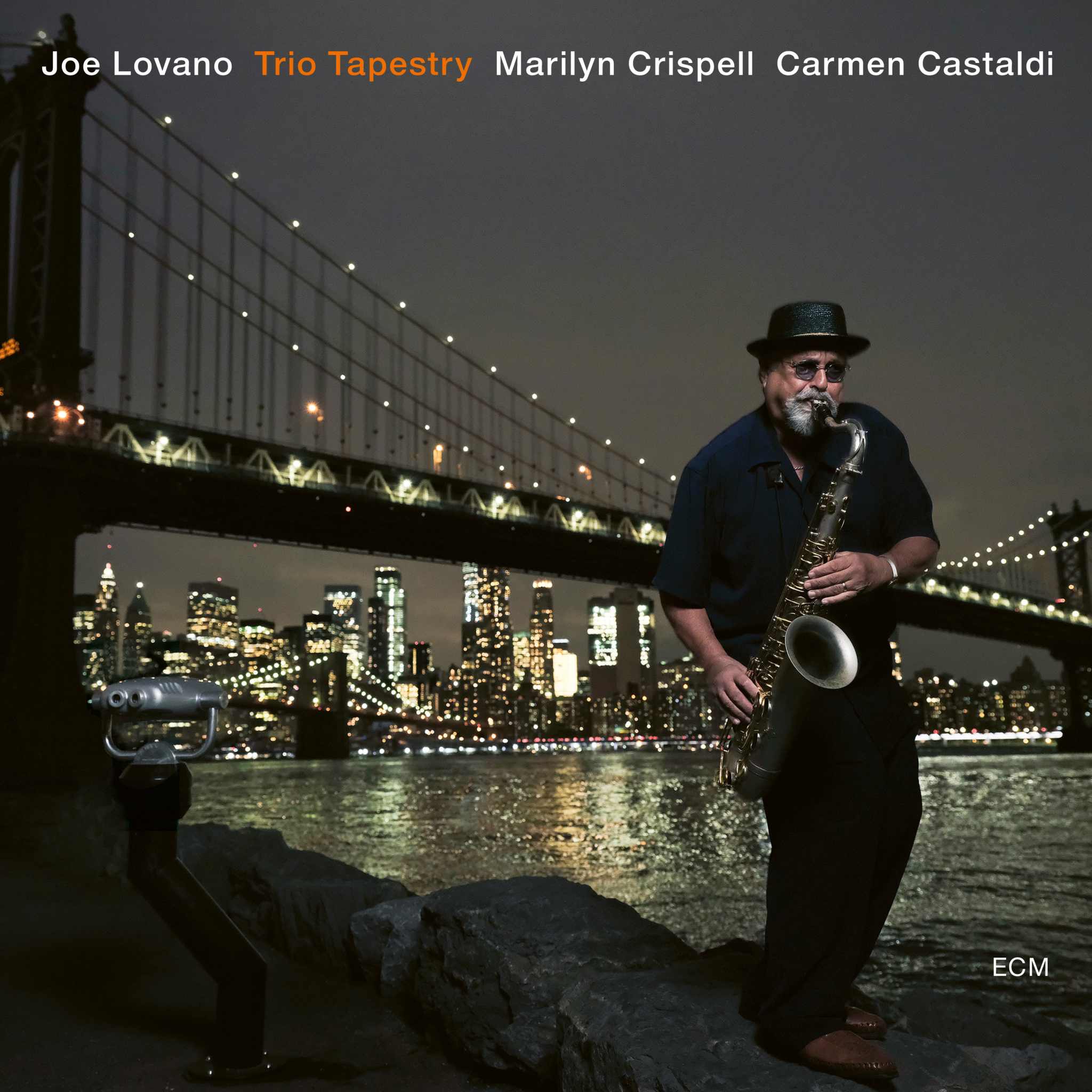
Joe Lovano, der angesehene Saxophonist, erscheint auf ECM-Aufnahmen seit vier Dekaden, mit bemerkenswerten Kollaborationen neben Paul Motian, Steve Kuhn und John Abercrombie. Mit "Trio Tapestry" präsentiert er sein Debüt als Leiter beim Label, wobei er eine beeindruckende neue Formation vorstellt, die durch lyrischen Fluss, feinfühlige Texturen und inspiriertes Zusammenspiel besticht. Innerhalb der musikalischen Strukturen finden Lovano und Pianistin Marilyn Crispell eine tiefe Harmonie. Joe äußert sich begeistert: "Marilyn verfügt über einen wundervollen Klang, feines Gespür und musikalische Vielseitigkeit". Carmen Castaldi am Schlagzeug, mit dem Lovano seit vielen Jahren zusammenarbeitet, ergänzt das Trio-Gefüge durch seine sensiblen Reaktionen, indem er die Kompositionen dezent ausschmückt. Das Ensemble betrachtet Lovano als Orchester, das gemeinsam eine faszinierende Klangwelt erschafft. "Ich habe zwar das Material eingebracht, aber jeder trägt gleichermaßen dazu bei, Musik in der Musik zu kreieren und sie auf eine wahrhaft besondere Weise harmonisch zu gestalten." Die Aufnahme von "Trio Tapestry" erfolgte im März 2018 im Sear Sound Studio in New York unter der Produktion von Manfred Eicher.