
Essential Martha Argerich
Martha Argerich has been one of the most captivating figures in classical music since her breakthrough victory at the International Chopin Competition in 1965. Celebrated for her extraordinary virtuosity, spontaneity and emotional immediacy, she has built a remarkable recorded legacy spanning solo repertoire, concertos and chamber music. This playlist gathers highlights from her Deutsche Grammophon and Decca recordings, offering a vivid portrait of one of the most charismatic pianists of our time. (Photo © Susesch Bayat / DG)
01The Young Firebrand
Argerich first became widely known through a series of solo recordings in the 1960s that took the music world by storm. In music by Prokofiev, Ravel, Brahms, Liszt, and Chopin in particular, here was a pianist of unparalleled virtuosity, blistering technique, and a fierce, unflinching musical personality.
- Frédéric Chopin
- Maurice Ravel
- Hungarian Rhapsody No. 6 in D-Flat Major, S. 244
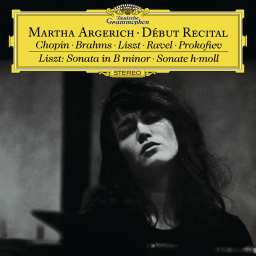 Hungarian Rhapsody No. 6 in D-Flat Major, S. 24406:23Franz Liszt
 - Sergei Prokofiev
- Gaspard de la nuit, M. 55Maurice Ravel
- Piano Sonata No. 7 in B-Flat Major, Op. 83Sergei Prokofiev

02The Poet
But it was not all fire and brimstone: Argerich’s technique was also at the service of a rare poetic sensibility that could go right to the heart of more introspective works by Schumann, Chopin, Bach, and Ravel.
- Kinderszenen, Op. 15Martha Argerich
- Kreisleriana, Op. 16Martha Argerich
- 24 Préludes, Op. 28Martha Argerich
- Frédéric Chopin
- Martha Argerich
- Piano Concerto in G Major, M. 83Maurice Ravel, Berliner Philharmoniker

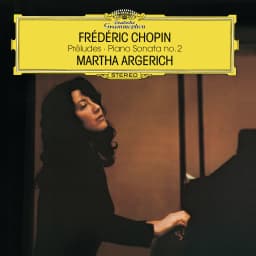

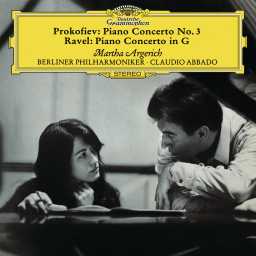
03Collaboration Early On
Always ambivalent about the lonely career of the solo virtuoso, Argerich began to enrich her musical life early on through collaboration, establishing several long-lived chamber music partnerships as early as the 1970s with musicians including Mischa Maisky and Gidon Kremer.
- Viola da gamba Sonata in D Major, BWV 1028Mischa Maisky, Martha Argerich
- Violin Sonata No. 5 in F Major, Op. 24 "Spring"Gidon Kremer, Martha Argerich
- Violin Sonata No. 10 in G Major, Op. 96Gidon Kremer, Martha Argerich
- Cello Sonata in G Minor, Op. 65Frédéric Chopin
- Fantasiestücke, Op. 73 (Version for Cello)Robert Schumann
- Fantasiestücke, Op. 73 (Version for Cello)Robert Schumann


04Concertos
Argerich formed several key partnerships with conductors in a concerto repertoire that was selective rather than broad, but which, alongside Tchaikovsky, Beethoven, Chopin, Liszt, and Schumann, also encompassed Shostakovich and Haydn, as well as, with Kremer, Mendelssohn’s early Concerto for Violin and Piano.
- Piano Concerto No. 1 in B-Flat Minor, Op. 23, TH 55I. Allegro non troppo e molto maestoso - Allegro con spirito
 I. Allegro non troppo e molto maestoso - Allegro con spirito21:08Pyotr Ilyich Tchaikovsky, Royal Philharmonic Orchestra
 - Piano Concerto No. 2 in B-Flat Major, Op. 19Martha Argerich, Philharmonia Orchestra, Giuseppe Sinopoli
- Piano Concerto No. 1 in C Minor, Op. 35Dmitri Shostakovich, Guy Touvron
- Keyboard Concerto in D Major, Hob. XVIII:11Joseph Haydn
- Piano Concerto in A Minor, Op. 54Martha Argerich, National Symphony Orchestra Washington
- Piano Concerto No. 1 in E Minor, Op. 11Frédéric Chopin
- Piano Concerto No. 1 in E-Flat Major, S. 124II. Quasi adagio - III. Allegretto vivace - Allegro animato
 II. Quasi adagio - III. Allegretto vivace - Allegro animato08:27Franz Liszt
 - Concerto for Violin, Piano & Strings in D Minor, MWV O4Martha Argerich


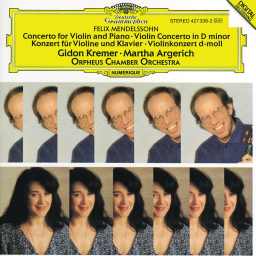
05Chamber Music
By the 1980s and after, chamber music had become one of the main centres of her activity. In composers such as Brahms, Shostakovich, and Tchaikovsky, she joined forces with collaborators such as Kremer, Maisky, Yuri Bashmet, and, more recently, Renaud Capuçon.
- Violin Sonata No. 9 in A Major, Op. 47 "Kreutzer"Ludwig van Beethoven
- Piano Quartet No. 1 in G Minor, Op. 25Johannes Brahms, Yuri Bashmet
- Piano Trio in A Minor, Op. 50I. Pezzo elegiaco. Moderato assai – Allegro giusto (Live)
 I. Pezzo elegiaco. Moderato assai – Allegro giusto (Live)18:30Pyotr Ilyich Tchaikovsky
 - Piano Quartet No. 1 in G Minor, Op. 25Johannes Brahms, Yuri Bashmet
- Violin SonataLeoš Janáček
- Theme And Variations For Violin And PianoOlivier Messiaen


06Four Hands
Argerich gave up solo recitals and recordings completely, with the result that appearances in two-piano and piano-duet repertoire became one of the most recognisable parts of her later career, including partnerships with Nelson Freire, Nicolas Economou, and Sergei Babayan.
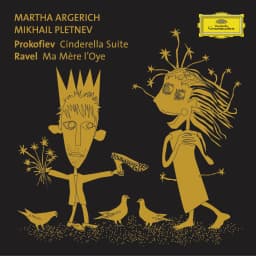
- Cinderella, Op. 87 - Suite From The Ballet: Transcribed For 2 Pianos By Mikhail PletnevSergei Prokofiev
- Ma mère l'oye, Suite, M. 60Maurice Ravel
- Symphonic Dances, Op. 45 (Version for 2 Pianos)Sergei Rachmaninoff
- Maurice Ravel
- The Nutcracker Suite, Op. 71a (Arr. Economou for 2 Pianos)Nicolas Economou
- 12 Movements from Romeo and Juliet, Op. 64II. Dance Of The Knights (Transcription For 2 Pianos By Sergei Babayan)
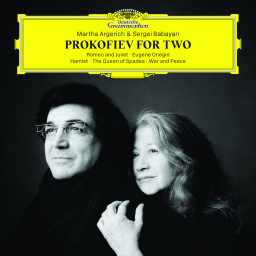 II. Dance Of The Knights (Transcription For 2 Pianos By Sergei Babayan)03:39Martha Argerich, Sergei Babayan
 - Sonata For 2 Pianos And Percussion, Sz. 110Béla Bartók
- Rapsodie espagnole, M.54Maurice Ravel


07Festival Years
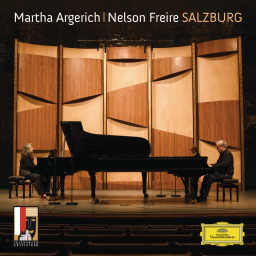
From the 1990s onward, festivals became central to the way Argerich performed and was recorded, above all at Verbier. They brought together many of the friendships, collaborations, and younger musical partners that shaped the later decades of her career.
- Piano Trio No. 39 in G Major, Hob. XV:25 "Gypsy"Joseph Haydn, Vadim Repin, Mischa Maisky
- Piano Trio No. 39 in G Major, Hob. XV:25 "Gypsy"Joseph Haydn, Vadim Repin, Mischa Maisky
- Piano Trio No. 39 in G Major, Hob. XV:25 "Gypsy"Joseph Haydn, Vadim Repin, Mischa Maisky
- Sonata for Piano 4 Hands in C Major, K. 521Wolfgang Amadeus Mozart
- Nocturnes, CD 98 (Transcr. Ravel for 2 Pianos)Claude Debussy
- Nocturnes, CD 98 (Transcr. Ravel for 2 Pianos)Claude Debussy
- Ma mère l'oye, M. 60 (Version for 2 Pianos)No. 3, Laideronnette, Impératrice des pagodes (Live)
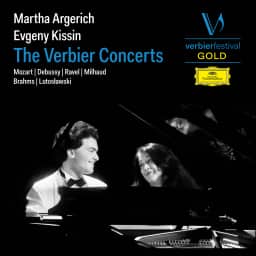 No. 3, Laideronnette, Impératrice des pagodes (Live)03:24Maurice Ravel
 - Scaramouche Suite (Version for 2 Pianos)Darius Milhaud
- Scaramouche Suite (Version for 2 Pianos)Darius Milhaud
