Albums


Appears On



AboutElvis Costello
Elvis Costello was born Declan Patrick Mac Manus in Paddington, London, on August 25, 1954. His mother's maiden name was Mary Costello. Declan Patrick Mac Manus grew up in Twickenham and attended a Catholic school in the neighboring district of Hounslow. As a child, he sang with his musical father in a TV commercial for lemonade ("I'm A Secret Lemonade Drinker"). His parents separated, and Declan Patrick moved with his mother to rural Birkenhead, near Liverpool, in 1971. There, he formed his first band, the folk duo Rusty. After school, he returned to London, where he founded the pub rock band Flip City. To make ends meet, Costello worked a series of office jobs: at the cosmetics company Elizabeth Arden or at Midland Bank. These jobs inspired many ironic lyrics in his early songs. Based on a demo, the indie label Stiff Records signed him. His manager there, Jake Riviera, persuaded Costello to adopt the stage name Elvis. Shortly thereafter, Costello's debut album "My Aim Is True" was released.
The album was a moderate hit, entering the British Top 20. On "My Aim Is True," Costello was accompanied by the American West Coast country band Clover (whose members lived in London and also played with Huey Lewis for a short time). Costello then recruited his own band: The Attractions, with Steve Nieve (piano), Bruce Thomas (bass), and Pete Thomas (drums). Together, they recorded Costello's first major hit, "Watching The Detectives." Costello's second LP, "This Year's Model," reflects the Sturm und Drang of those years (you can find our review of it here). In 1979, Costello truly broke through commercially. First, with the Nick Lowe-produced "Armed Forces" LP, which reached #2 in England and #10 in the U.S.A. Furthermore, he produced the self-titled debut album by the 2Tone band The Specials (later The Special AKA) – a Top 5 success in England.
In the 1980s, Costello turned to other musical genres. Soul on "Get Happy." Pop on "Trust." Country on "Almost Blue." Roots rock on "Blood & Chocolate" and "King Of America." His English audience was irritated by Costello's country nostalgia (after all, he recorded "Almost Blue" in 1981, long before the alt-country revival of the later 1990s). So an enraged Costello had the following sticker affixed to the English album version: "WARNING: This album contains country & western music and may cause offence to narrow minded listeners." Costello became even angrier when American country singer George Jones shortly thereafter landed at #6 on the UK singles charts with his version of Jerry Chestnut's "Good Year For The Roses" – the song is also on "Almost Blue."
A truly baroque temperament dominates Costello's subsequent LP "Imperial Bedroom," which owes much to the production of Geoff Emerick, The Beatles' sound engineer. Jazz trumpeter and singer Chet Baker recorded a version of Costello's title track from this album before his death. Critics lauded it, but the public did not embrace it. In the mid-80s, Costello took on Mrs. Thatcher and the English monarchy on "Punch The Clock" and sang at "Live Aid." Costello befriended producer T-Bone Burnett around that time. He also produced the album "Rum, Sodomy and the Lash" by the Irish punk-folk band The Pogues.
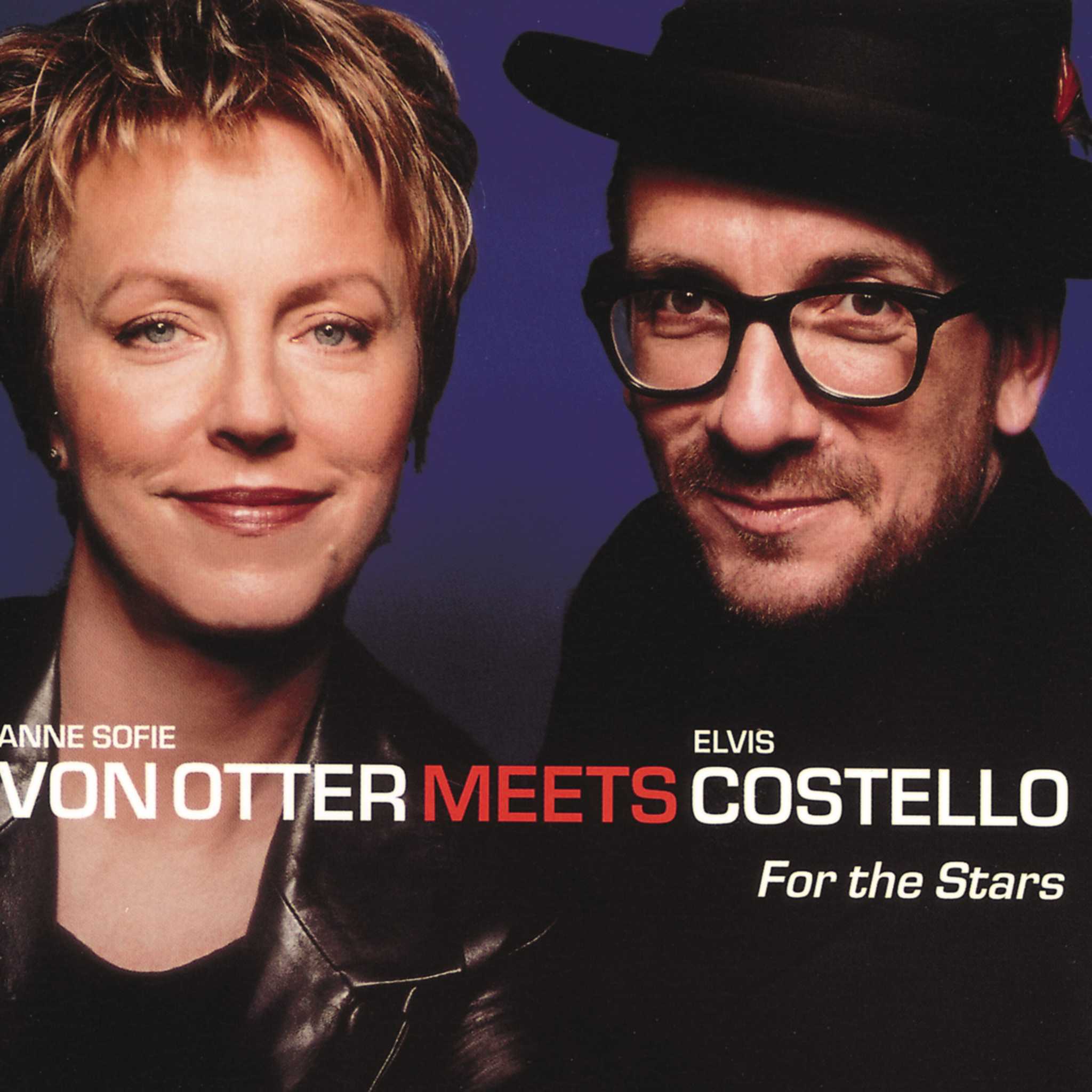
In 1993, Costello described a new radical and controversial change of direction with "The Juliet Letters," a collection of art songs recorded by the Brodsky Quartet. He promptly returned to rock 'n' roll. In 1996, after a tour for the album "All This Useless Beauty," his backing band The Attractions disbanded. A period of various collaborations began. In addition to Bill Frisell, opera singer Anne Sofie von Otter made an album with Costello. "For The Stars" was released on the classical label Deutsche Grammofon. Costello's new backing band, The Imposters, was essentially The Attractions, but with a different bassist: Davey Faragher from Cracker. In 2003, however, Elvis Costello & The Attractions were inducted into the Rock 'n' Roll Hall of Fame.
Meanwhile, Costello had increasingly distinguished himself as a songwriter for others. "Scarlet Tide," written with Burnett for the film "Cold Mountain" (sung by Alison Krauss), was nominated for a Grammy. Costello wrote a good portion of the material for Diana Krall's 2004 album "The Girl In The Other Room" – the jazz pianist and singer's biggest current chart success. Shortly after his ballet "Il Sogno," which reached #1 on the classical charts, Costello returned to the blues on the blues album "The Delivery Man" on the US roots rock label Lost Highway. Together with funk legend Allen Toussaint, the songwriter processed the shock of Hurricane Katrina into the album "The River In Reverse," released in 2006 on the New York cult jazz label Verve. In April 2008, Costello released his album "Momofuku" – only on vinyl and as a digital download. Previously, the controversial artist had announced that he would never release another album because "anyone with an MP3 player can change the order of the songs." "When I play live, that's not possible, so in the future, I will only perform." In a later interview, the Londoner retracted these statements. His new album, National Ransom, is set to be released in 2010.