Skip to content
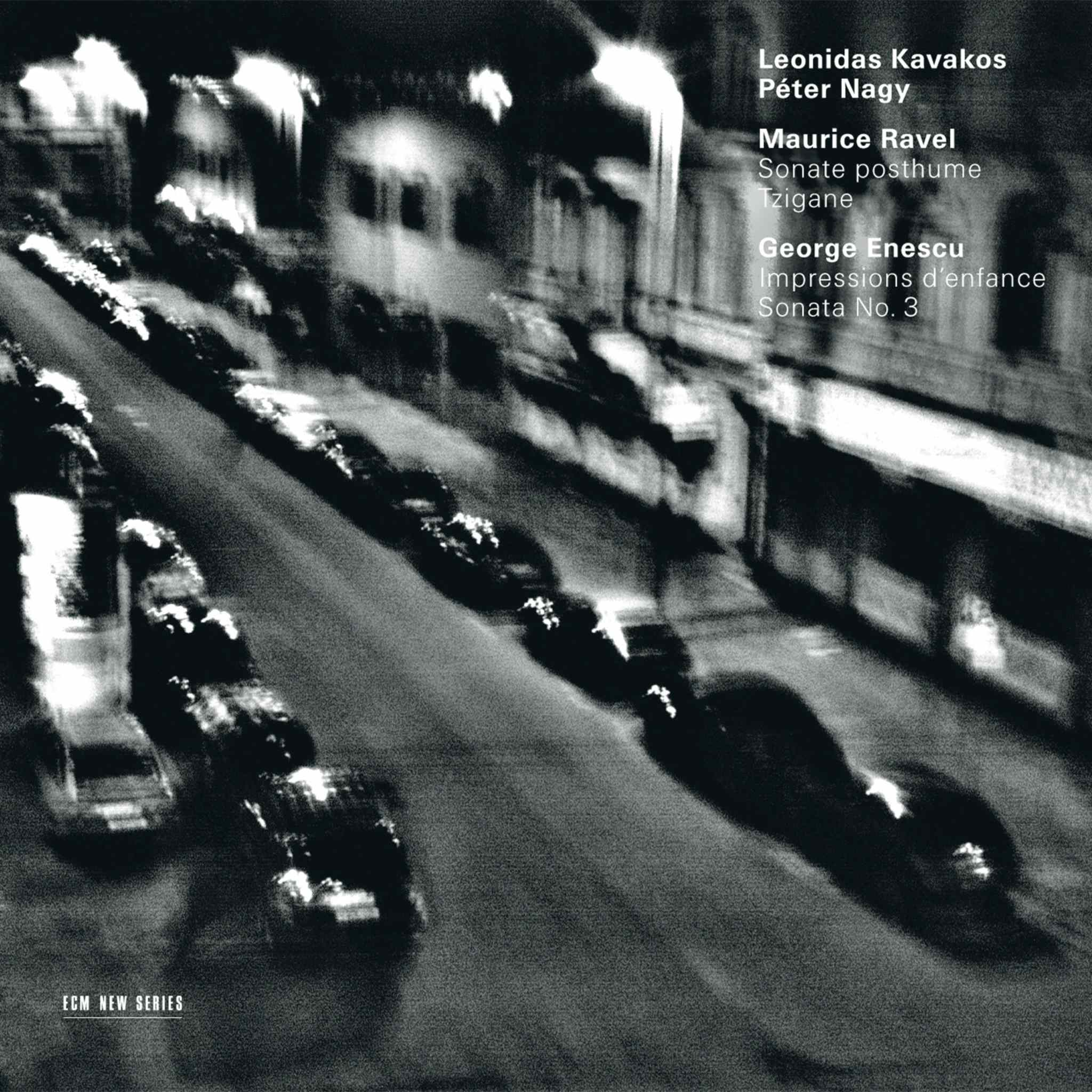
Maurice Ravel / George Enescu

Maurice Ravel / George Enescu

Leonidas Kavakos, Péter Nagy

Duration78 Min

George Enescu

Violin Sonata No. 3 in A Minor, Op. 25

Album insights

The three trios recorded on this CD were composed by individuals of different ages: a young teenager, a man nearly forty years old, and a seventy-seven-year-old. The difference in musical expression among these works is far greater than the composers' names may suggest and each trio holds a distinct significance within the composers' overall body of work.

Debussy was admitted to the Paris Conservatoire at the age of ten in the fall of 1872. Despite his parents' hopes for him to become a virtuoso pianist, Debussy's time at the Conservatoire did not lead him to win top prizes. Antoine Marmontel, Debussy's piano teacher, recommended him to Tschaikowskis's patron, Nadeschda von Meck, as a talented pianist. Debussy traveled with her and her family, teaching piano to her children and accompanying her daughter, a singer, on the piano. Although Madame von Meck praised his playing ability, noting his lack of emotional empathy towards Tschaikowskis's music.

From Arcachon, the group journeyed to various cities, where Madame von Meck sent Tschaikowski a piece composed by Debussy during the summer. In Florence, Debussy was joined by cellist Daniltschenko and violinist Pachulski, aligning to perform every evening with a repertoire likely including Beethoven and Schubert. Tschaikowski, under pressure from Madame von Meck, composed his only piano trio two years later.

Madame von Meck detailed Debussy's criticism of German music and highlighted his affinity for lightness and clarity, evident in his trio composition. The work, resembling more brightly than mature Debussy compositions sounds like Delibes' music at times. In contrast, Ravel's trio demonstrates a middle-aged man reveling in exploration. Ravel's intricate structures like Pantoums and Passacaglias in contrast to Fauré's emphasis on movement between tones and chords, offering linguistic rather than formal challenges.

Fauré's Trio, created while battling deafness, showcases linguistic intricacies demanding keen listener attention. Fauré defied traditional structures, exploring multiple harmonic pathways in each composition. Fauré's music requires a Theseus-like patience to unravel its complexities, leading to moments of revelation akin to freeing Pelléas. Fauré's Trio masters balancing whimsy and reason, creating a harmonious blend that subtly shifts with each listening.