
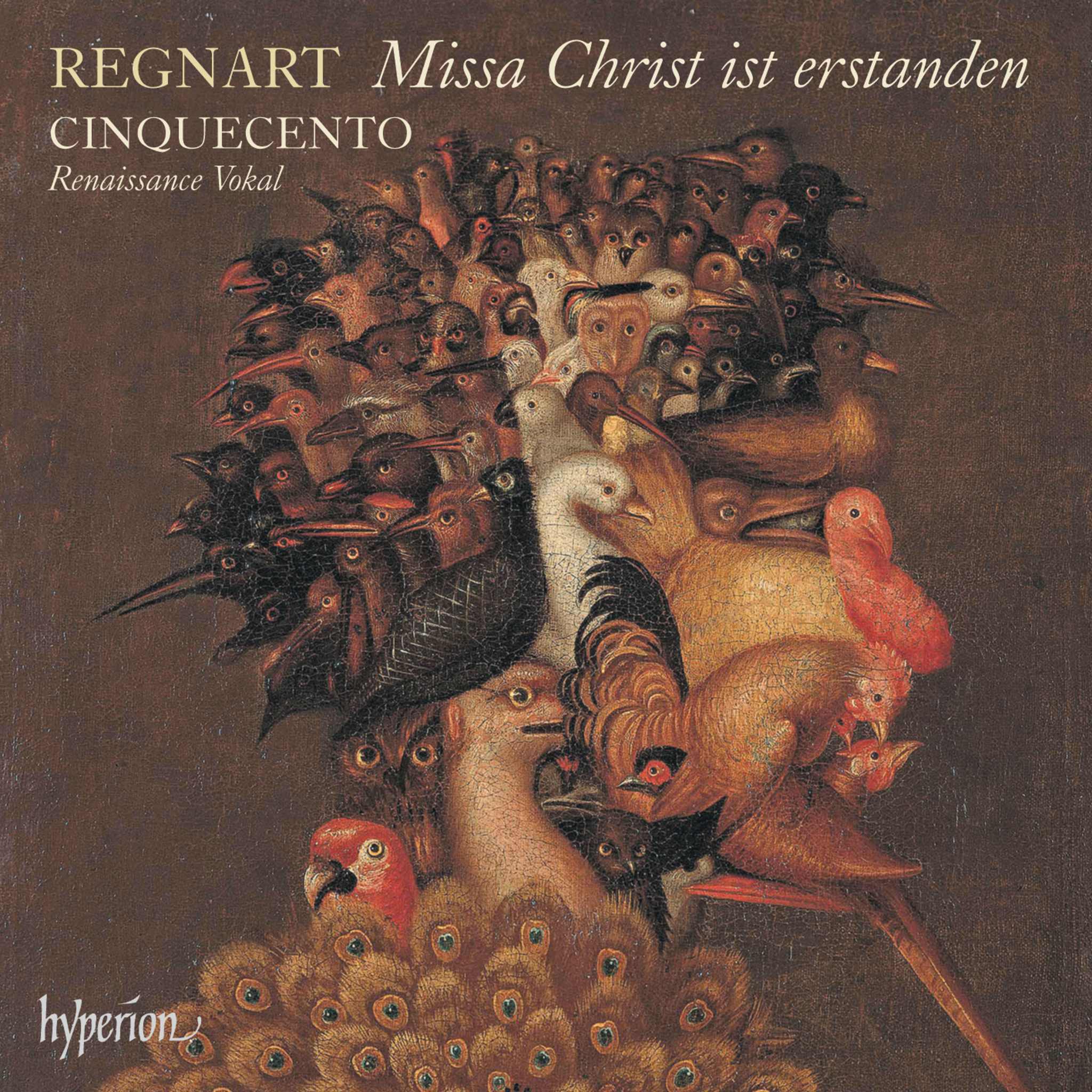




In 1580, the renowned Munich composer Orlando di Lasso proposed several candidates to the Saxon Elector for the vacant position of Kapellmeister (music director). Among the Dutch composers mentioned, who were active at major European courts, he particularly emphasized Jacobus Regnart, who was working as a composer at the Prague court of Emperor Rudolf II and had already made a name for himself with his secular musical works. Regnart had recently been promoted to Vice-Kapellmeister at the imperial court, which further underscored his suitability.
Although the offer from Dresden was very attractive, Regnart declined. His Catholic convictions may have deterred him, as he feared difficulties at the Lutheran court in Saxony. Instead, he remained in Prague. Later, he moved to the court of Archduke Ferdinand II in Innsbruck, where he devoted himself to composing sacred works to fulfill the Archduke's religious ambitions.
Regnart had recently been promoted to Vice-Kapellmeister at the imperial court, which further emphasized his suitability. Regnart maintained contact with former associates and returned to Prague after the death of Ferdinand II in 1595. Upon his return, he brought with him some thirty polyphonic Mass compositions, which he had prepared for publication. In these Masses, Regnart incorporated, among other things, old German Easter hymns, some dating back to the 12th century, and skillfully integrated them into the traditional structure of the Latin Mass Ordinary.
Since Regnart, as a foreigner, had not grown up with these melodies, he drew upon popular hymnals and existing works. His musical language was accessible and attracted listeners who were also open to Protestant music. Through diverse musical forms and techniques, he succeeded in innovatively combining old hymn melodies with polyphonic textures.
Regnart's ability to reinterpret Italian songs with catchy German lyrics and his successful collaborations with poets further contributed to his popularity. He died in Prague in 1599, before the Masses were published. His widow Anna and their children continued the publication and dedicated the printed works to important Catholic princes.