





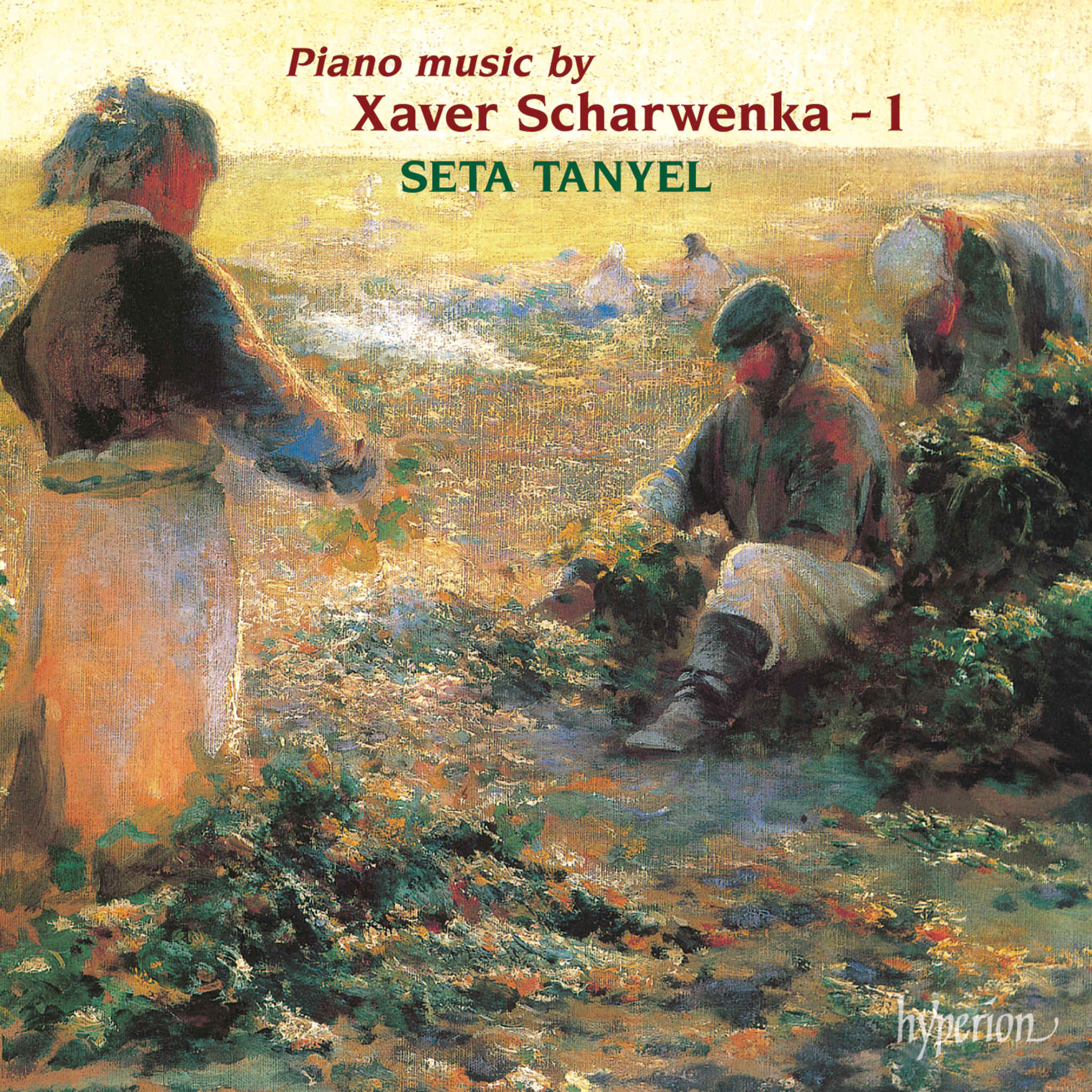
Xaver Scharwenka was born on January 6, 1850, in Samter near Posen, then part of East Prussia. His musical talent was evident early on, and he received music lessons from his father as a child.
In 1865, the family moved to Berlin, where both Xaver and his brother were accepted into Theodor Kullak's New Academy of Music. There, Xaver studied piano directly with Kullak and composition with Richard Wuerst, making rapid and remarkable progress.
As early as 1868, Scharwenka himself began teaching at the Academy. He made his debut as a pianist a year later at the Berlin Singakademie and was praised for his expressive, clear, and virtuosic playing.
His first works were published in 1869, including a piano trio, a violin sonata, and the first volume of his Polish National Dances.
From 1874 onward, he increasingly devoted himself to an international career as a concert pianist, which significantly raised his profile. In the following years, he continued composing, founded his own conservatory in Berlin, and undertook numerous concert tours throughout Europe and the USA.
After an extended stay in America, Scharwenka returned to Germany in 1898. Until his death in 1924, he remained dedicated to musical education, composing, and the further development of his repertoire.
His compositional output for piano reflects a profound understanding of the instrument and a high regard for pianistic skill. Scharwenka's style combines elements of Polish and German music, with Schumann being a particular influence. Despite his numerous travels and stays in various countries, he always remained committed to the musical ideals of the 19th century.