
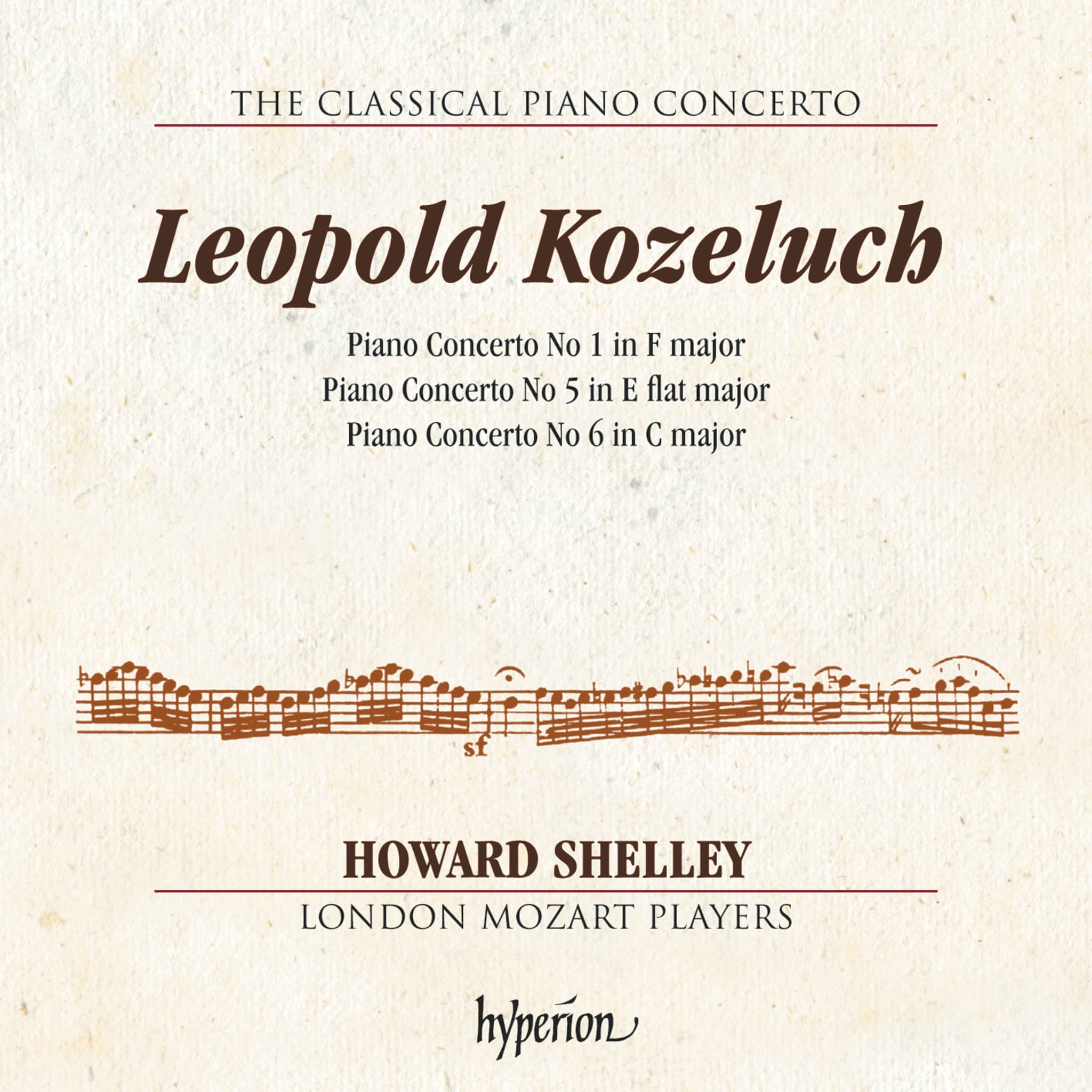


Leopold Kozeluch, born on June 26, 1747, in Velvary near Prague, later changed his birth name to Jan Antonín to avoid confusion. After studying law at Prague University, he moved to Vienna in 1778, where he gained considerable recognition as a composer, pianist, and music teacher.[2][5] His student, the blind pianist Maria Theresia Paradis, in particular, contributed to the fame of his works in England around 1785 with her brilliant performances.[5] Kozeluch's fame soon extended beyond Vienna and was further solidified by enthusiastic reviews, such as that of Charles Burney. In Vienna, he competed with Mozart for the favor of music lovers and was considered his equal as a pianist and composer.[5]
In addition to his work as a composer and pianist, Kozeluch founded his own music publishing house. Like other important musicians of his time, such as Haydn and Beethoven, he also arranged British folk songs.[5] Despite later disagreements with Mozart and Salieri, his musical economy is still appreciated today.
His piano concertos of the 1780s are characterized by elegant simplicity and are less melodic than Mozart's works. Kozeluch's style is marked by clear, often two-part piano writing with rare harmonic surprises. The Allegro opening movement of his Concerto No. 1 in F major is particularly noteworthy for his artful thematic development and emotional depth.
As his own publisher, Kozeluch was able to publish his works quickly, giving him an advantage over Mozart. His galant piano concertos are characterized by thematic simplicity and are reminiscent of Mozart's earlier compositions. With their clear structures and delicate melodies, his works retain a timeless elegance and offer a fascinating glimpse into the music of the late 18th century.[5]