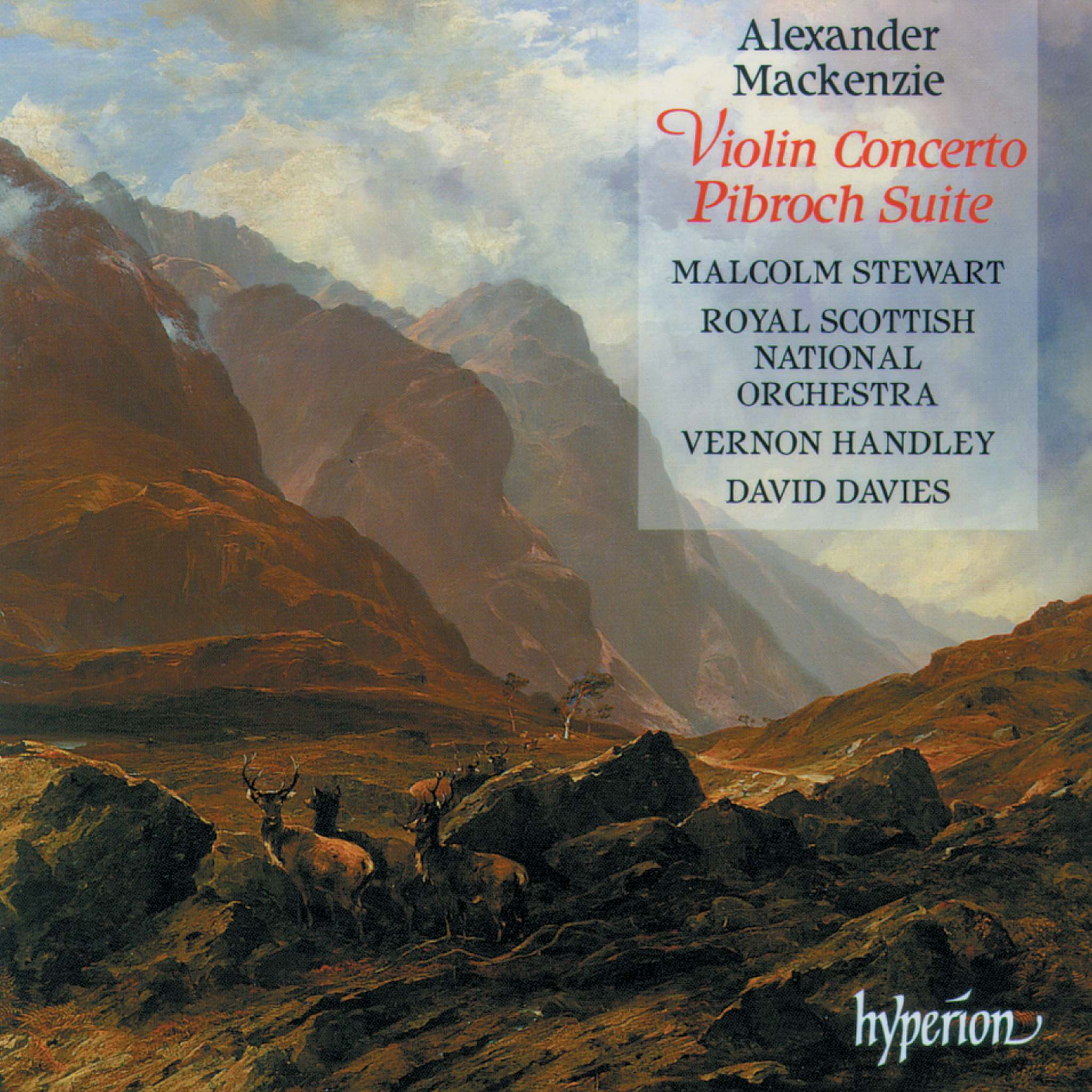
For Sir Alexander Campbell Mackenzie, the violin held a central place in his life. His father, Alexander Mackenzie, a concertmaster and conductor in Edinburgh, fostered his son's musical career from an early age. Through his studies abroad and his father's support, Mackenzie gained invaluable experience that significantly shaped his artistic development. After graduating from the Royal Academy of Music, he returned to Edinburgh, where he worked as a music teacher, played chamber music, and conducted orchestras – his passion for the violin remaining constant. In June 1884, Mackenzie began composing his Violin Concerto in C-sharp minor in Florence. This period was characterized by great creative energy. Medical advice led him to give up his teaching position to devote himself entirely to composition. The Violin Concerto was commissioned by the Birmingham Festival in 1885; during its composition, he had to take frequent breaks, partly because a suitable soloist was being sought for the premiere. Despite initial obstacles, Mackenzie succeeded in completing the work. After Joseph Joachim declined, Pablo de Sarasate took over the premiere in Birmingham in August 1885. The choice of Sarasate as soloist proved to be a pivotal moment in Mackenzie's career. Sarasate's virtuosity and dedication made a lasting impression on him and led to a close friendship between the two artists. In the 19th century, the focus increasingly shifted to virtuosos on the violin. Mackenzie's Violin Concerto combined elements of the German and French violin traditions and blended various styles. Through its distinctive form and clear musical language, the work represented both innovation and a respect for tradition. While Sarasate and Joachim pursued very different interpretive approaches, both significantly shaped the development of the genre. Following the success of the Violin Concerto, Mackenzie devoted himself to further compositions, including the suite "Pibroch" for violin and orchestra, which he wrote for Sarasate in 1889. This suite reflected Mackenzie's strong interest in Scottish music and tradition and testified to his close relationship with Sarasate. Mackenzie's artistic development and close collaboration with Sarasate are reflected in his compositions and demonstrate his versatile musical abilities.