


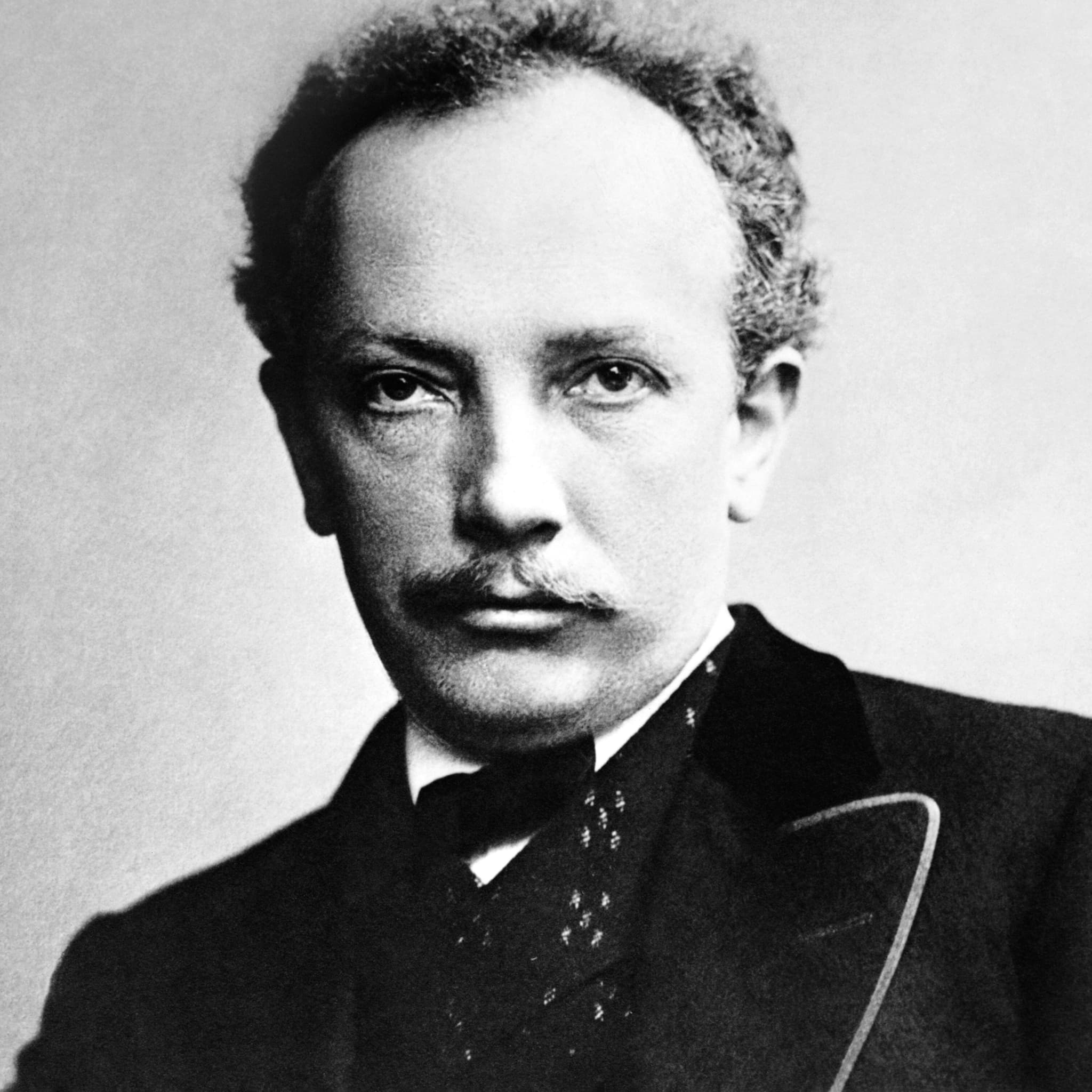





Initially, this edition was planned to include all of Richard Strauss's songs for voice and piano, excluding the orchestral songs. This concept was abandoned in the latest edition by adding the Four Last Songs. These works, considered the crowning achievement of Strauss's lifelong engagement with song, impressively fill the resulting gap.
The inclusion of the Four Last Songs seems particularly fitting, as Strauss always considered orchestral colors and techniques in his piano arrangements. He was equally at home at the piano and as a conductor, which is evident in the piano versions of these songs: they reflect the orchestra in the performer's mind, thus creating the characteristic sound world of Strauss songs.
A particularly striking example of this is the song "Cäcilie," which Strauss wrote for his wife Pauline in 1894. Its powerful accompaniment, rousing climaxes, and finely nuanced verses are characteristic. "Wenn..." is a prime example: Written in the heroic key of E-flat major, it depicts a sonorous journey through Persia. The songs from 1899 to 1901, with their diversity and intensity, demonstrate Strauss's enormous compositional development during a creative period in which many of his most important works had already been composed.
For instance, "Bruder Liederlich" (Brother Laughter) showcases his playfulness with boisterous shouts and sharp dissonances, while "An Sie" (To You) is formal and in a heroic key. "Die Ulme zu Hirsau" (The Elm at Hirsau), on the other hand, presents Strauss's monumental style and draws on a folk legend. Despite occasional bombast, each of these songs possesses a distinctive character.
In Opus 46, Strauss set poems by Friedrich Rückert to music, including "Ein Obdach gegen Sturm und Regen" (A Shelter Against Storm and Rain). "Gestern war ich Atlas" (Yesterday I Was Atlas) has a serious tone with a striding opening and somber turns. A lighter contrast is offered by "The Seven Seals." "Dawn" brilliantly conveys stormy emotions, while "I See as in a Mirror" ends with a metaphysical note that highlights the primal power of love.
These are followed by two folk-influenced songs from Opus 49: "They Know Not" and "Bachelor's Oath." Both pieces are characterized by concise characters and moods. The Three Songs from the Books of Discontent of Rendsch Nameh and the "Ophelia Songs" demonstrate a surprising originality in Strauss's oeuvre.
In "Who Will Demand of the World," Strauss succinctly criticizes unjustified demands. "Have I Ever Advised You?" expresses quiet annoyance and a connection to nature, while "Wanderer's Serenity" captivates with its world-weary irony. The Five Little Songs, in turn, offer thematic and emotional diversity, with "The Cup" demanding a particularly heroic stance.
The Four Last Songs, composed in Switzerland in 1948, impress with their rich harmonies and a melancholic atmosphere. Each song addresses a transition: from winter to spring, from summer to autumn, from day to night, and from life to death. These farewell works mark a high point in Strauss's art song and testify to his mastery of melody and harmony.