
Concerts and Operas
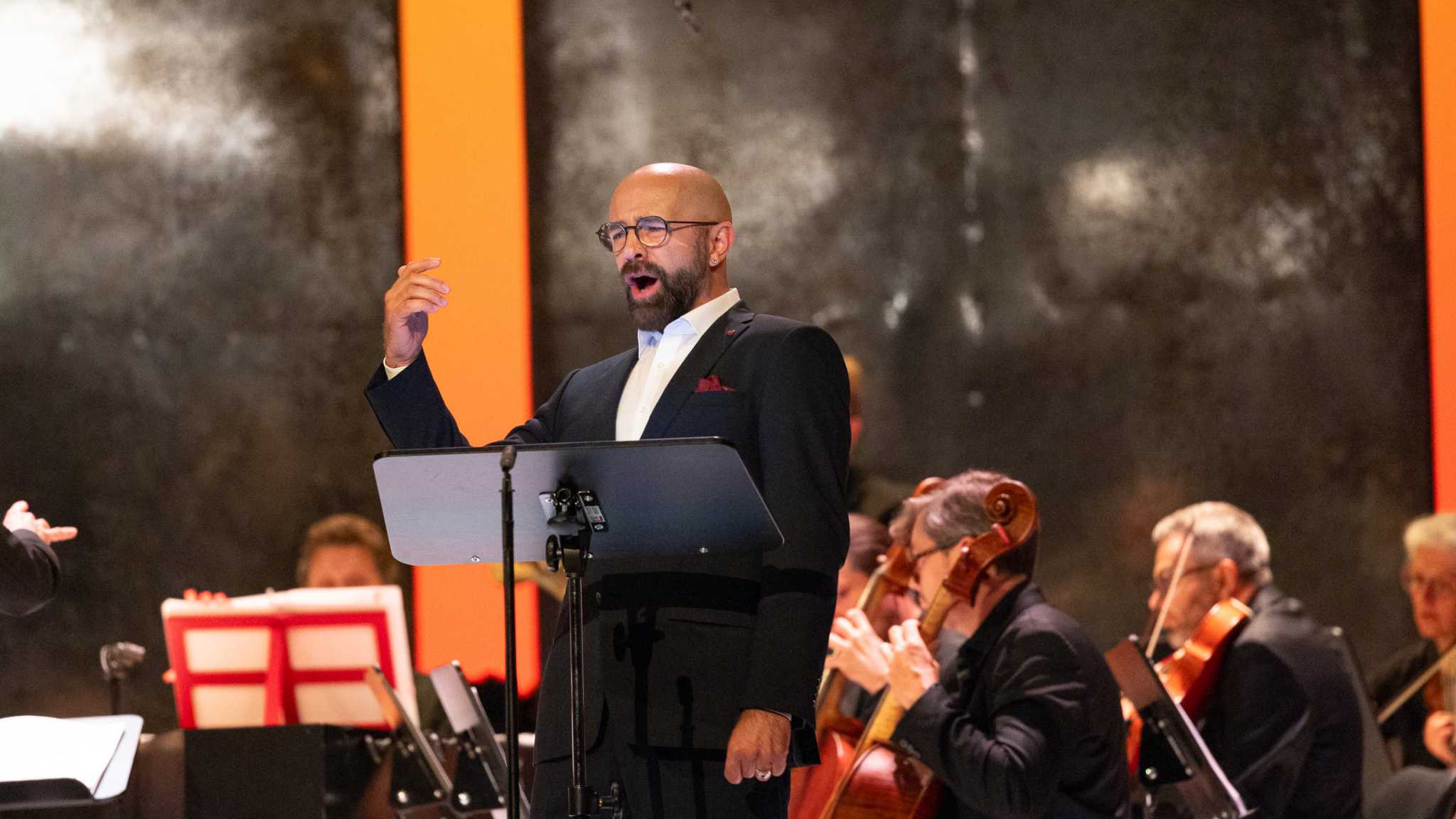
AboutMax Emanuel Cencic

“Max Emanuel Cencic is blessed with currently the most beautiful voice in the countertenor field,” attested the specialist magazine “Opernwelt” of an artist who has since developed into one of the best countertenors of our time.
Max Emanuel Cencic, born in Croatia, impressed audiences at just six years old when he sang the famously notorious Queen of the Night aria on a television show. He quickly became a star in his home country. From 1987 to 1992, he was a member of the Vienna Boys’ Choir. Afterward, he began his solo career, aided by a special technique that allowed him to continue singing in the soprano range until 1997, despite his voice breaking.
In 2001, Cencic transitioned to the countertenor fach. Among the conductors with whom he has regularly collaborated since then are William Christie, René Jacobs, Alan Curtis, Christophe Rousset, Emmanuelle Haim, Diego Fasolis, and Jean Christophe Spinosi.
He performs worldwide at major opera houses, such as the Vienna State Opera, Bavarian State Opera Munich, Teatro Carlo Felice di Genova, Semperoper Dresden, Teatro Real Madrid, Théâtre des Champs-Élysées Paris, Théâtre La Monnaie Brussels, Deutsche Oper Berlin, Gran Teatre del Liceu in Barcelona, and the Frankfurt Opera.
Furthermore, Cencic is a welcome guest on international concert stages like the Barbican Centre London and the Concertgebouw Amsterdam. For his interpretation of Nerone in Monteverdi’s opera “L’Incoronazione di Poppea” in Basel, “Opernwelt” named Cencic “Young Singer of the Year 2003.” Cencic made his debut at New York’s Carnegie Hall in 2005 with the role of Perseo in Vivaldi’s rediscovered serenata “Andromeda liberata.” In 2010, he appeared as the Herald in the world premiere of “Medea” at the Vienna State Opera.
In early 2013, his album “Rokoko” was released, an exciting homage to the composer Johann Adolf Hasse.
In the 2020/2021 season, the countertenor undertook outstanding projects, including a new production of Dalbavie’s Le Soulier de Satin at the Opéra de Paris (house debut), Porpora’s Carlo il Calvo at the Bayreuth Baroque Opera Festival, where the artist sang and directed the role of Lottario, the title role in a new production of Hasse’s Cajo Fabrizio, Carmina Burana at the Vienna Konzerthaus, a concert performance of Carlo il Calvo at the Theater an der Wien and the Amsterdam Concertgebouw, the title role in Vinci’s Gismondo re di Polonia, as well as Rossini’s La Donna del Lago at the Zagreb Opera, and at the Festival in Saaremaa, where the artist sang the challenging role of Malcolm and also directed.
With his virtuosic mezzo-soprano, Max Emanuel Cencic demonstrates how technically brilliant yet modern and sensitive Baroque singing can be. For over 35 years, he has graced stages, performing worldwide at major opera houses such as the Vienna State Opera, the Theater an der Wien, the Zurich Opera House, the Opéra Royal in Versailles, the Bavarian State Opera, the Staatsoper Unter den Linden Berlin, Barcelona’s Gran Teatre del Liceu, the Théâtre des Champs-Élysées, and Brussels’ La Monnaie opera house. Max Emanuel Cencic celebrated his 35th stage anniversary on September 21, 2017, on the stage of the Zagreb Opera, where he sang the role of Orfeo in Gluck’s Orfeo ed Euridice. Concerts have taken him to venues including the Laeiszhalle Hamburg, Carnegie Hall (New York), the Barbican Centre (London), Amsterdam’s Concertgebouw, the Vienna Musikverein and Konzerthaus, and the Tchaikovsky Hall in Moscow. He has also appeared at numerous festivals worldwide, such as the Salzburg Festival. He regularly collaborates with conductors such as William Christie, René Jacobs, Ottavio Dantone, Diego Fasolis, George Petrou, Emmanuelle Haïm, and Riccardo Muti. He began his vocal training as a Vienna Boys’ Choir member and started a solo career as a soprano in 1992, which he continued as a countertenor from 2001.
Max Emanuel Cencic draws significant attention to his projects by bringing them closer to the audience through opera productions, CD recordings, and extensive tours. Additionally, broadcasters like Mezzo TV and Arte Concert have documented many of his outstanding performances, such as his rediscovered Handel operas Alessandro and Arminio. As artistic director of Parnassus Arts Productions, he is responsible for the conception, direction, and performance of important works of Italian Baroque, including the sensational rediscovery of Leonardo Vinci’s last opera Artaserse. As originally performed in Rome in 1730, the new production also featured an exclusively male cast with five countertenors. The work not only captivated on stage but also received all relevant record awards for its recording, including the ECHO Klassik in 2013 and 2014, the German Record Critics’ Award, and the Diapason d’Or, as well as a Grammy nomination. Vinci’s opera Catone in Utica, which involved four countertenors, was also a resounding success as both a CD and a staged production. The CD production Ottone, with Max Emanuel Cencic in the title role, was nominated for a Grammy.
His solo recordings are equally compelling: On Venezia, he captivated both audience and press with highlights of Venetian opera. The CD Rokoko compiles virtuosic arias from the extensive oeuvre of Johann Adolph Hasse. Max Emanuel Cencic’s critically acclaimed CD Arie Napoletane is dedicated to masterpieces of the Neapolitan School. His extensive discography, featuring several world premiere recordings, has received numerous awards, including the Diapason d’Or, the German Record Critics’ Award, and the Croatian Porin Award. Another highlight is the European tour of his new solo program Porpora (on the occasion of the 250th anniversary of Nicola Antonio Porpora’s death) with solo concerts in Paris, Halle, Toulouse, and many more, as well as his eponymous solo CD, which was awarded a Diapason d’Or. Several of his releases have been named “Editor’s Choice” by the British Gramophone Magazine.
For his artistic achievements, he was honored by the French Ministry of Culture as a Chevalier dans l’Ordre des Arts et des Lettres.
Max Emanuel Cencic has also long made a name for himself internationally as a director, for example, through the live production of Hasse’s Siroe, which toured Europe and was released as a CD by Decca. At the Handel Festival Karlsruhe in 2016 and 2017 (title role + direction) as well as 2019 and 2020 (role of Arsame + direction), he appeared in a dual role: he sang the title role of Arminio or the role of Arsamene, and also directed the rarely performed works. Max Emanuel Cencic’s staging of Nicola Antonio Porpora’s rarely performed opera Polifemo at the Salzburg Whitsun Festival 2019 in the world-famous Felsenreitschule received enormous success, standing ovations, and enthusiastic reviews, where the artist was responsible for the direction and sang the role of Ulisse. Further directorial productions planned for the coming years include Rossini’s Tancredi, Mozart’s Die Zauberflöte, Porpora’s Carlo il Calvo, and Vinci’s Alessandro nell’Indie.
Since September 2020, Max Emanuel Cencic has been the artistic director of the Bayreuth Baroque Opera Festival. The first edition of the new, spectacular festival, which took place despite the coronavirus crisis, was a huge success with both audience and press; 400,000 visitors worldwide followed the broadcasts online, and all Bayreuth performances were sold out. Max Emanuel Cencic was responsible for the direction of the new production Carlo il Calvo, where he sang the role of Lottario, and the production was named Opera New Production of the Year 2020 at the Opera Trophies of the French specialist magazine Forum Opera. In his first season, Max Emanuel Cencic invited world stars such as Joyce DiDonato, Franco Fagioli, and Jordi Savall to Bayreuth, and also performed himself in the title role of Vinci’s concert opera Gismondo re di Polonia on the Bayreuth stage of the Margravial Opera House.