


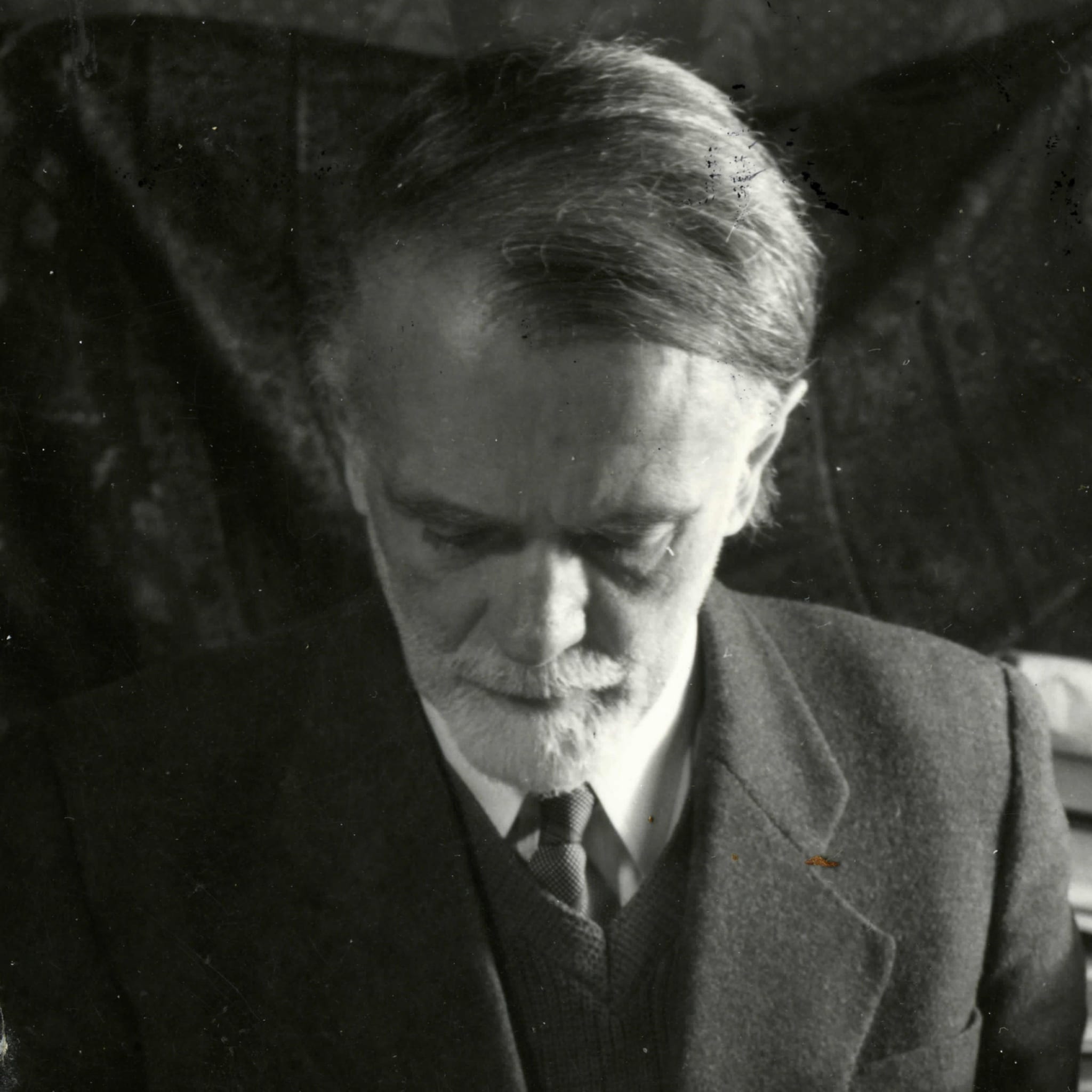



Zoltán Kodály, born on December 16, 1882, in Kecskemét, Hungary, and died on March 6, 1967, in Budapest, is considered one of his country's most important composers. His international fame was established in 1923 with his choral work Psalmus Hungaricus. In addition to his work as a composer, Kodály was also active as an ethnomusicologist and educator and is regarded as a pioneer in the reintroduction of folk music into 20th-century music.
He began composing even before studying at the Budapest Conservatory. After graduating, he developed a particular interest in Hungarian folk music, which significantly influenced his work. Together with his friend Béla Bartók, he undertook extensive research in this field, which led to their first joint publication, "Twenty Hungarian Folk Songs," in 1906. Further collections followed later.
From 1931 to 1933, Kodály lectured on folk music at the University of Budapest. By this time, several of his compositions had already premiered both in Budapest and abroad. He undertook concert tours of England and the USA and had also been active as a conductor since 1927. His achievements were recognized with numerous awards: he received the Kossuth Prize three times, was awarded an honorary doctorate from the University of Budapest, and annual Kodály celebrations are held in Budapest.