

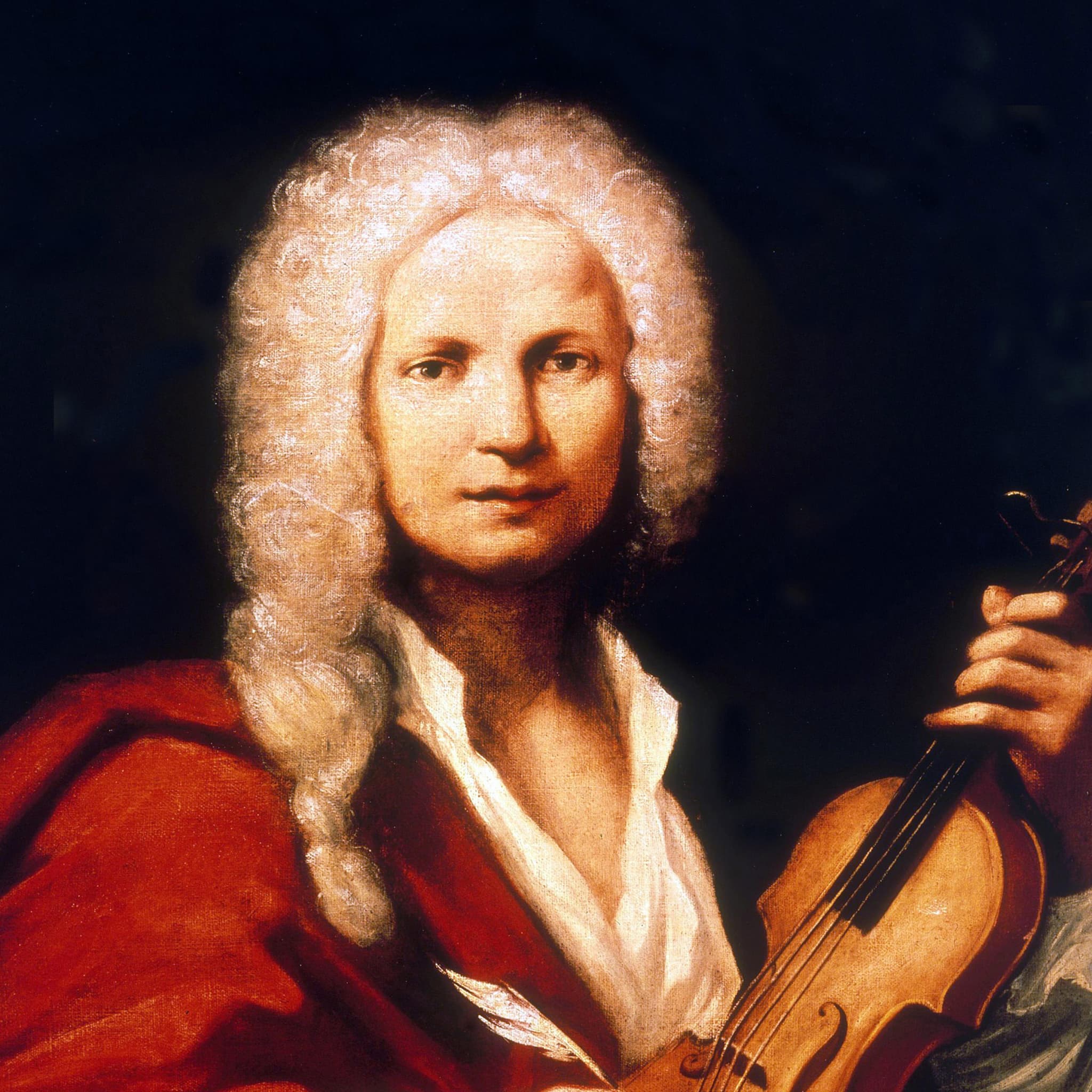




In recent decades, Vivaldi's music has experienced a remarkable renaissance. His "Four Seasons" is now considered one of the great works of classical music and, alongside the compositions of Beethoven and Mozart, is among the most frequently performed pieces of classical music. Although Vivaldi was very popular in Venice during his lifetime, his music declined in popularity towards the end of his life. The once wealthiest musician of his time died impoverished in Vienna in 1741, after his works were no longer considered contemporary in Venice.
Antonio Lucio Vivaldi, born on March 4, 1678, in Venice, showed exceptional talent on the violin even as a child. In 18th-century Venice, then the musical capital of the Western world, he quickly rose from teacher and composer to a star of the opera world. Because of his red hair, he was also known as the "Red Priest" of Venice. An important reason for his Europe-wide success was an improvement in music printing technology. As one of the first Italian composers to do so, he published his works in Amsterdam, contributing to the emergence of a European musical style and sparking "Vivaldi fever" across Europe.
Vivaldi particularly loved solo concertos and is said to have composed over 300 of them, including more than 220 for the violin. After his death, many of his compositions fell into oblivion. It wasn't until almost three centuries later that his manuscripts resurfaced, and after World War II, Vivaldi regained popularity. His scores are performed worldwide today, and his music is ubiquitous – whether in classical concerts, performances, soundtracks, or even elevator music.
The Four Seasons, in particular, became a huge success even during Vivaldi's lifetime. The Spring Concerto contains melodies that are still considered true earworms today. This composition is among the most popular pieces in music history and touches listeners with its vivid depiction of natural phenomena and the Italian spirit of 18th-century Venice.