
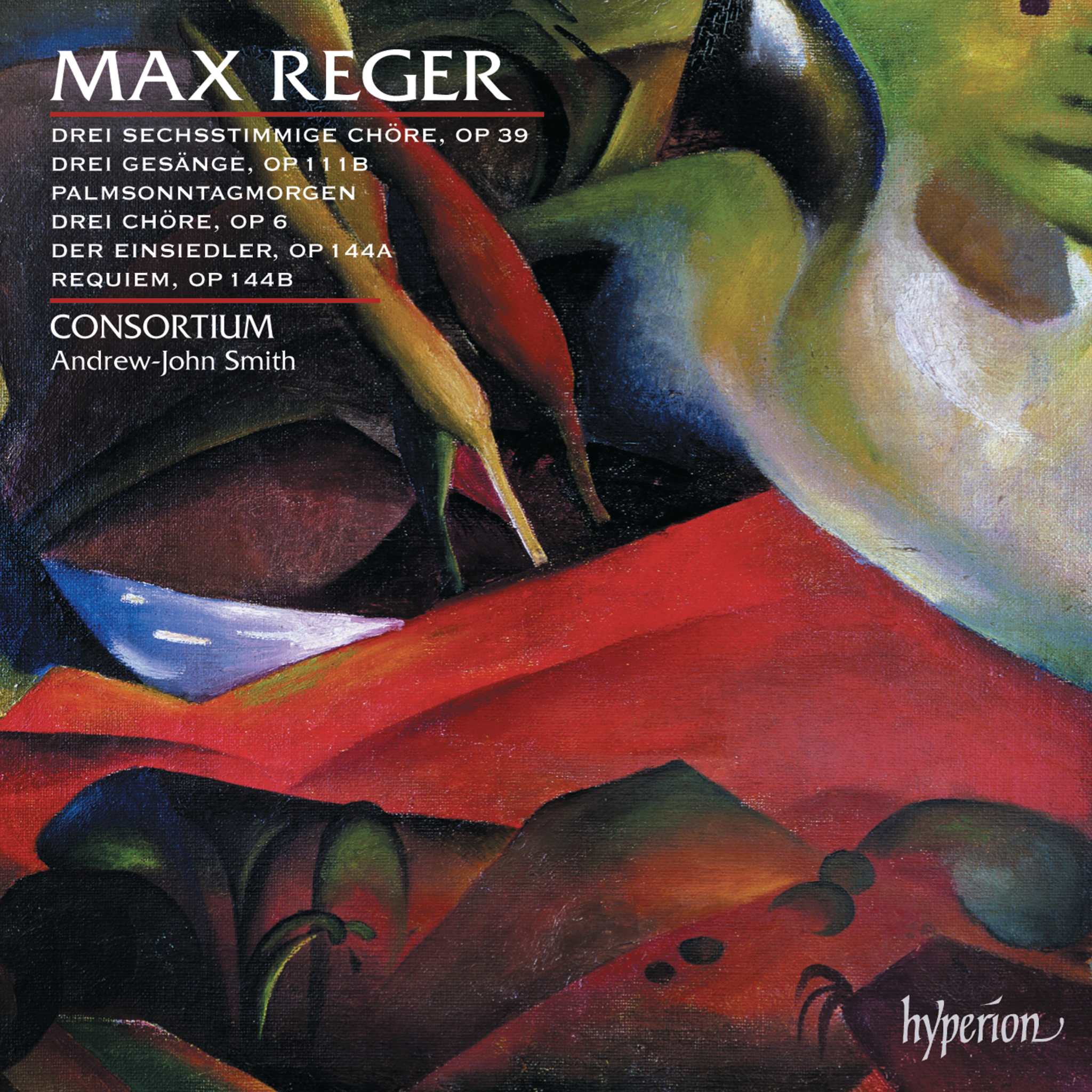



Max Reger died at the young age of forty-three as a result of his heavy drinking, tobacco use, and overeating. Nevertheless, he left behind a diverse musical oeuvre, composing in almost every genre except opera and ballet. His complete works comprise 147 compositions, including the well-known pieces "Der Einsiedler" (The Hermit) and the "Requiem" (Op. 144), as well as works such as "Palmsonntagmorgen" (Palm Sunday Morning). Reger's creative drive was characterized by fluctuating inspiration, which contributed to a decline in his reputation—particularly outside Germany—after his death. Compared to more popular composers, he received less critical acclaim. His keyboard works are especially famous, including the "Variations on a Theme by Bach" for piano, as well as sacred choral works such as the "100th Psalm."
Bach and Brahms had a strong influence on Reger's musical development, and many of his compositions contain literary references. Like other artists of his era, he engaged creatively with German Romanticism. His 1915 work, "The Hermit," based on a poem by Joseph von Eichendorff, reflects the late Romantic worldview. Reger's versatility is also evident in his numerous songs and choral works, in which he skillfully translates profound emotion and expressiveness into music.
His compositions for mixed choir and piano show the influence of Brahms. The women's choirs employ various expressive devices such as homophony and chromatic harmony. Works like "Palm Sunday Morning" and the "Requiem" demonstrate Reger's musical treatment of religious themes. The so-called Hebbel Requiem, which grapples intensely with death, was performed only after Reger's death and underscores his artistic legacy.