AboutLeonard Bernstein
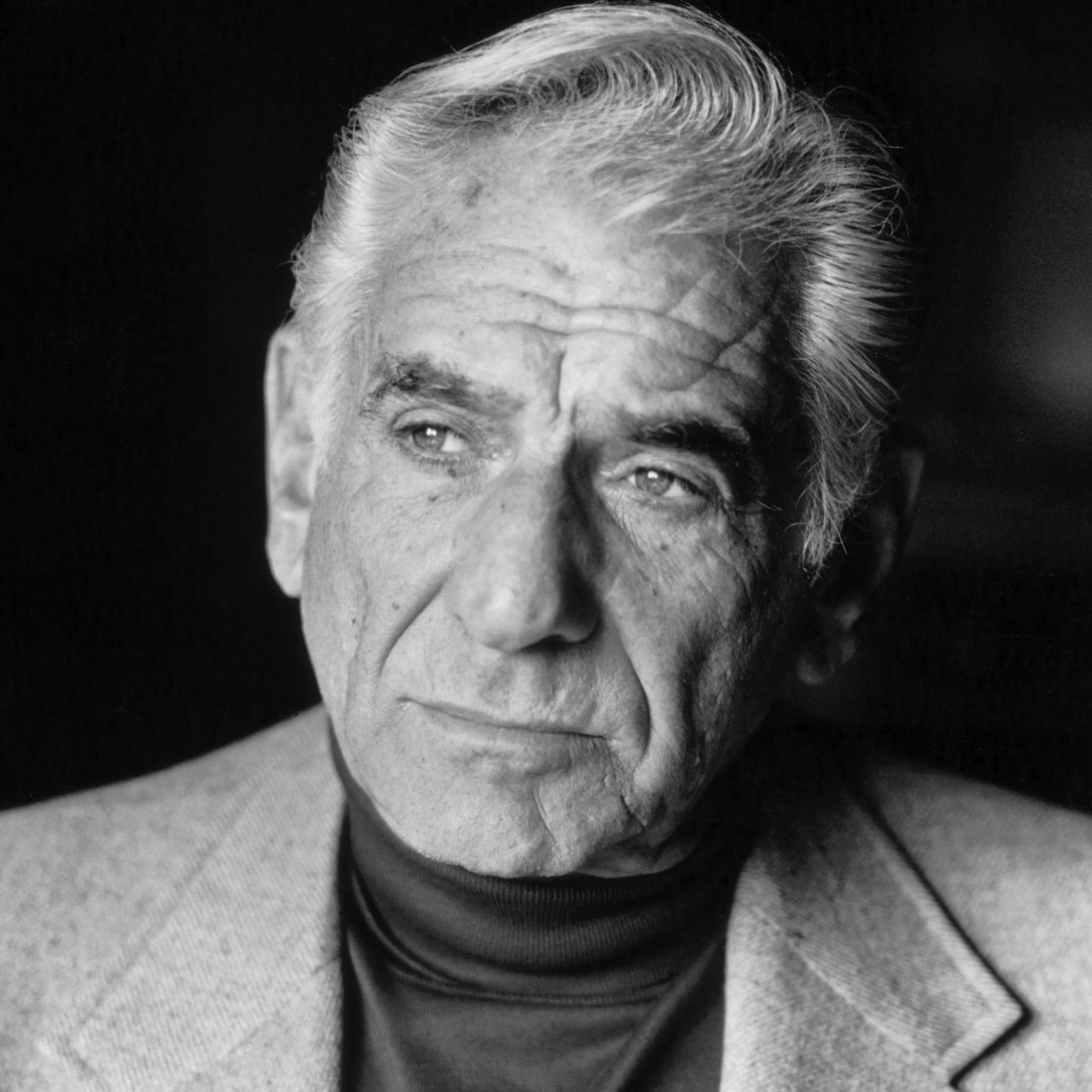
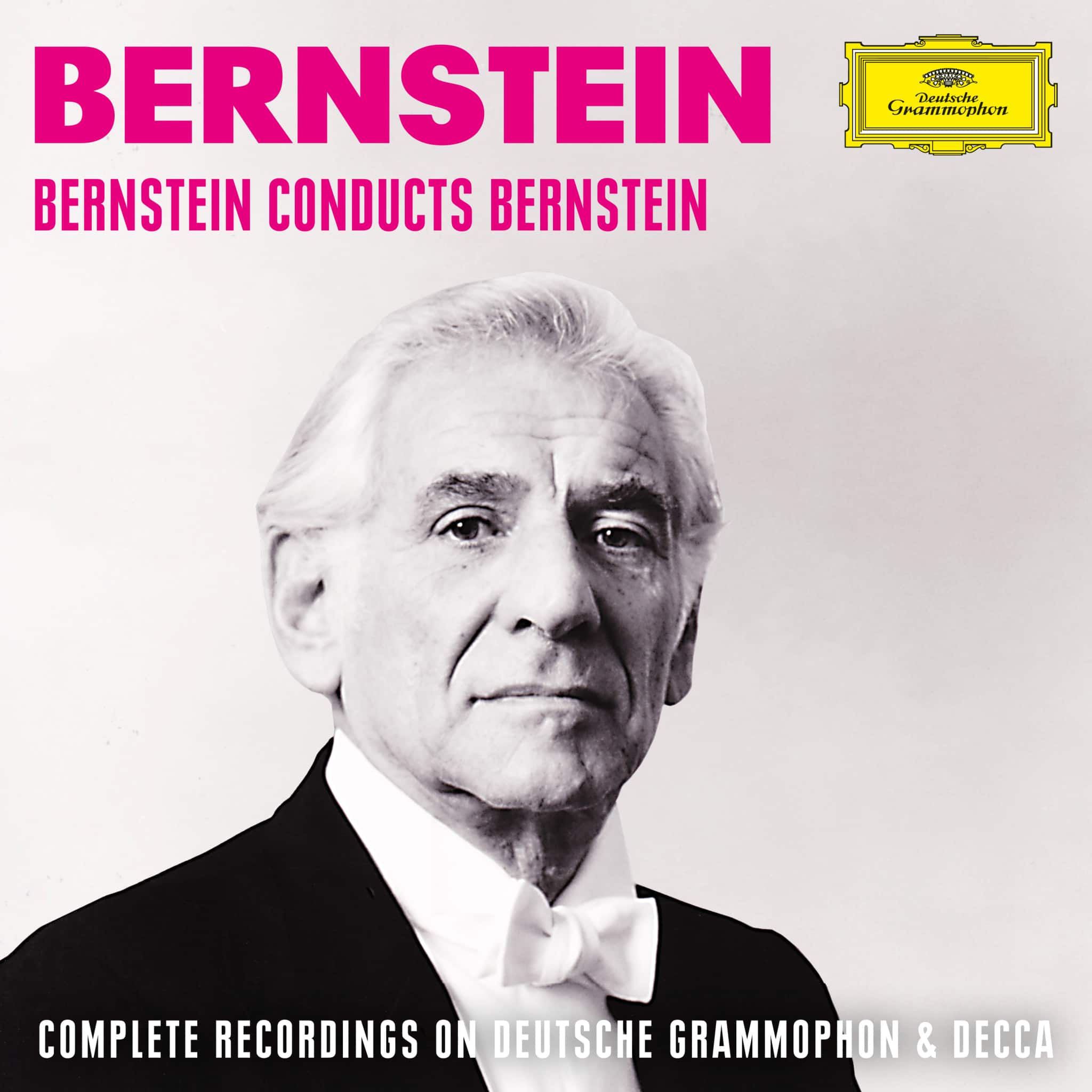
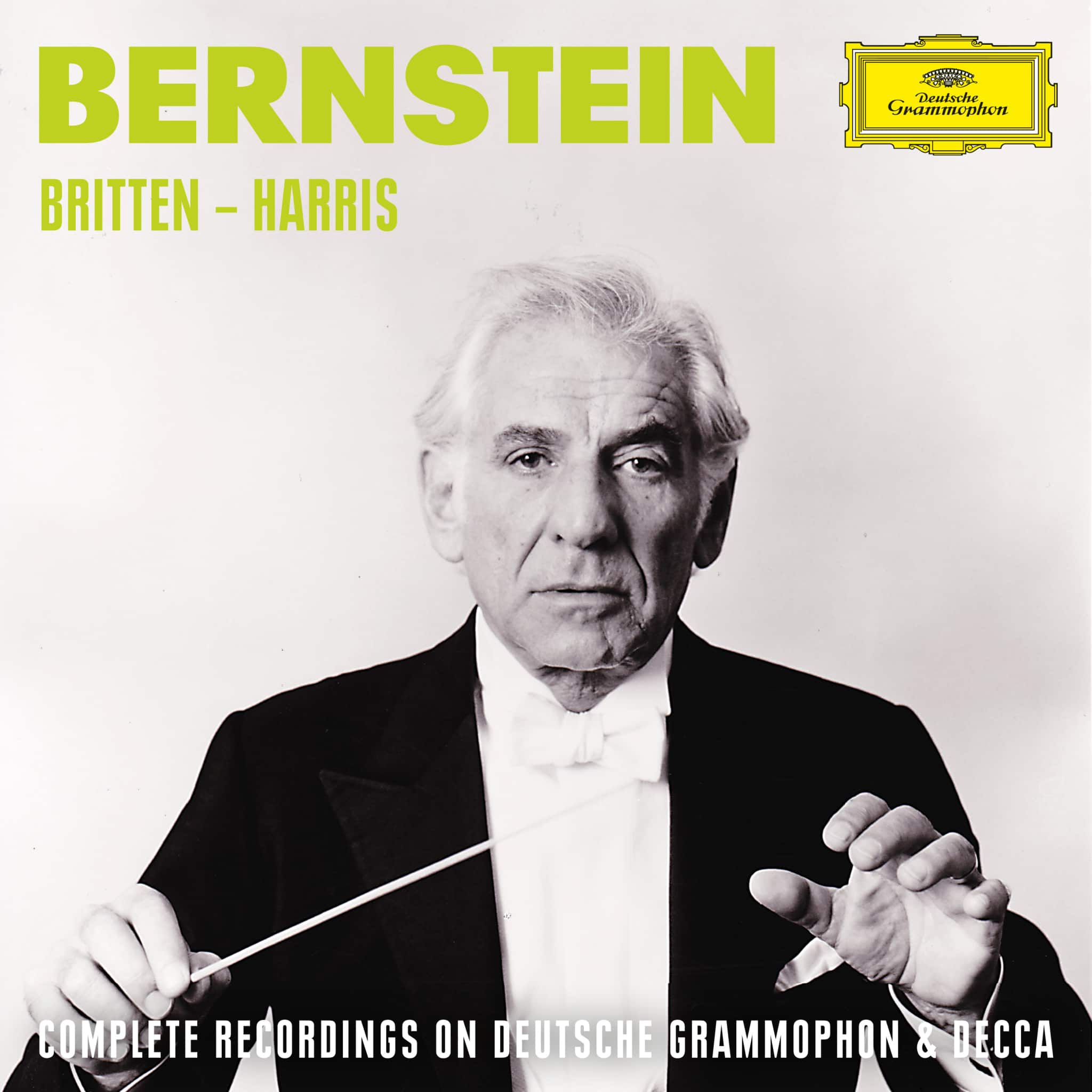
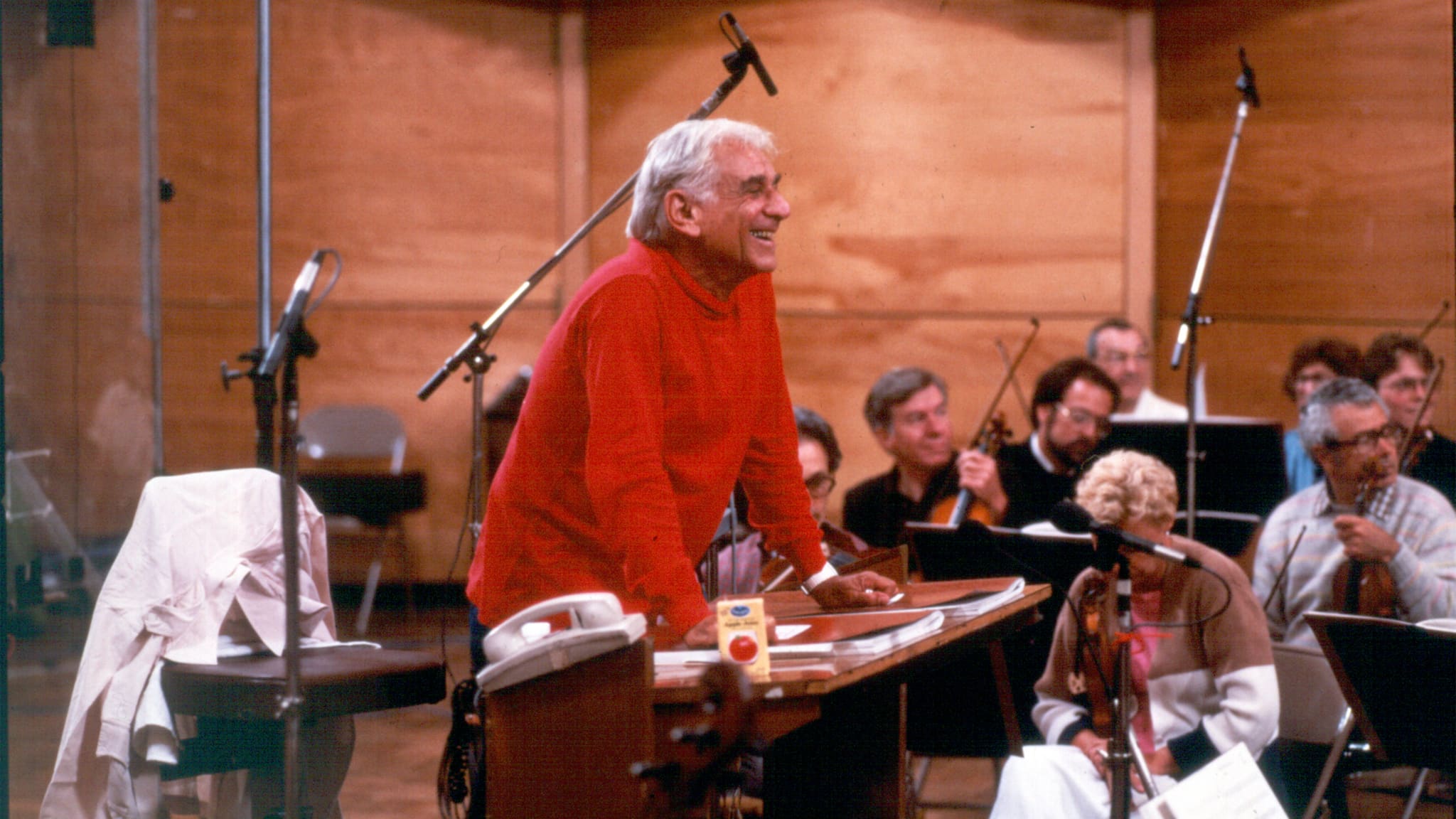
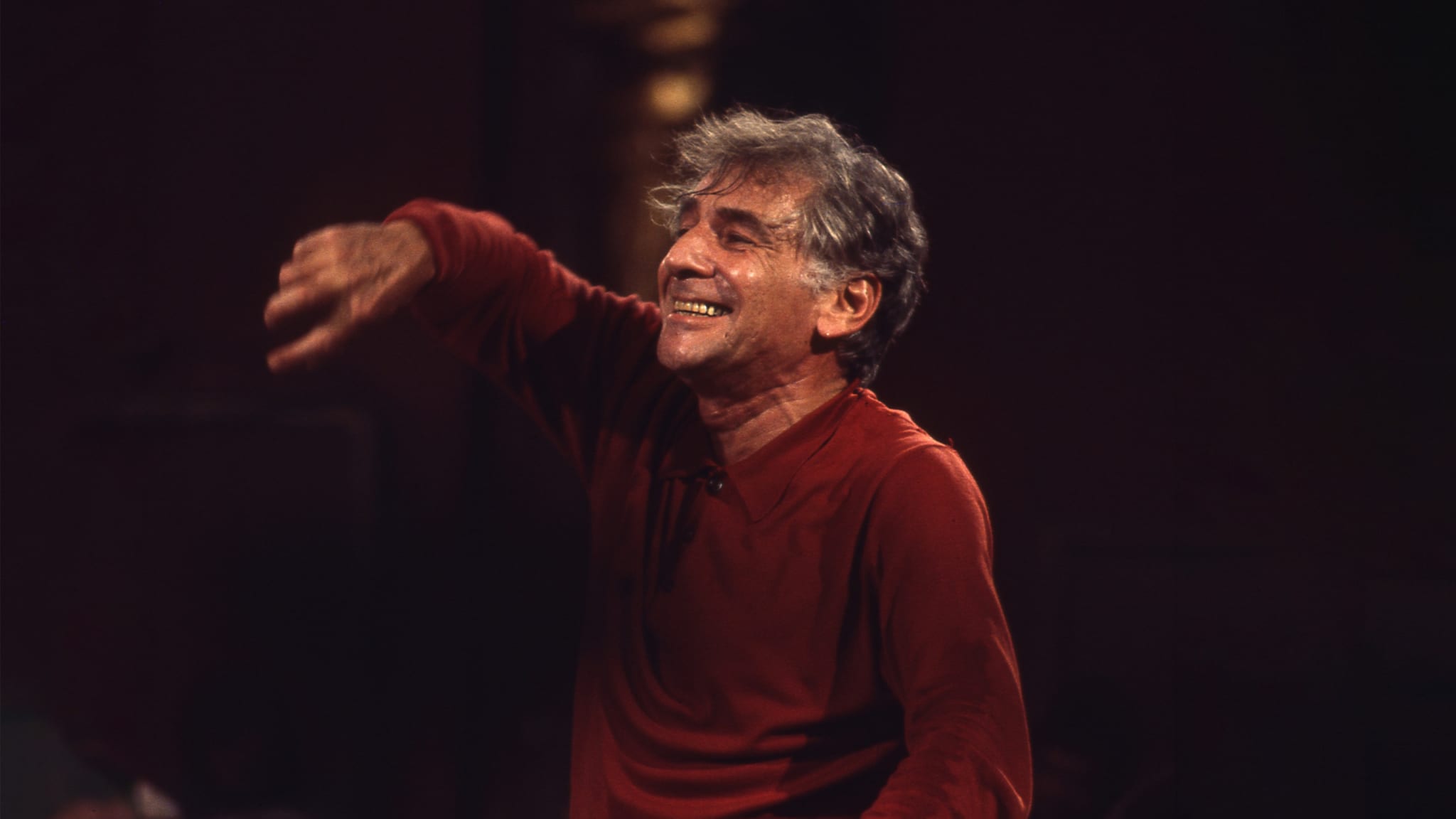
Leonard Bernstein was born on August 25, 1918, in Lawrence, Massachusetts. He learned to play the piano as a child, spent his youth in Boston, attended Latin School, and then studied the instrument at Harvard University with Heinrich Gebhard and Helen Coates. After graduating in 1939, encouraged by Dimitri Mitropoulos, he continued his music studies at the Curtis Institute of Music in Philadelphia, including conducting with Fritz Reiner and piano with Isabella Vengerova. Bernstein spent the summer months as a student and assistant to Serge Koussevitzky in Tanglewood, the rural festival site of the Boston Symphony Orchestra. In 1943, Artur Rodzinski of the New York Philharmonic engaged him as his assistant and assistant conductor.
Exclusive interviews with Leonard Bernstein Watch on STAGE+
Bernstein's big moment as a conductor came when he had to step in at short notice for the suddenly ill Bruno Walter on November 14, 1943, and took over the direction of a concert broadcast nationwide. He was just 25 years old at the time and was henceforth considered a great hope for the profession. In 1945, he became chief conductor of the New York City Symphony Orchestra. In 1951, he took over the conducting class at the Berkshire Music Center in Tanglewood and a lectureship at Brandeis University. During these years, Bernstein also regularly appeared at the podium of the New York Philharmonic and the Israel Philharmonic Orchestra and was engaged as a guest conductor by many major orchestras in America and Europe.
In 1958, the New York Philharmonic appointed him their Music Director. Bernstein, then forty years old, was the first American-born and trained musician to be appointed to one of the top positions in North American musical life. Over twelve years of successful collaboration, Bernstein conducted more performances of the orchestra than all his predecessors. His Mahler interpretations, for example, contributed significantly to the composer's recognition in the second half of the 20th century. During these years, Bernstein also caused a stir beyond the circles of the scene as a guest conductor of the New York Metropolitan Opera, La Scala in Milan (as the first American), and as an opera conductor at the Vienna State Opera.
Leonard Bernstein's work as a composer produced a wide range of genres and styles. He composed three symphonies ("Jeremiah," "The Age of Anxiety," "Kaddish"), three ballets ("Fancy Free," "Facsimile," "Dybbuk"), two operas ("Trouble in Tahiti" and its sequel "A Quiet Place"), the "Chichester Psalms" for choir and orchestra, the "Serenade for Violin and String Orchestra" (after Plato's Symposium), and film scores such as "On The Waterfront." Of his Broadway scores, "On the Town," "Wonderful Town," and especially "West Side Story" became important milestones in the development of American musical theater. "Mass" opened the Kennedy Center in Washington in 1971, and in 1981, the work was performed as the first stage composition by an American composer at the Vienna State Opera.
Bernstein's musicological work also provides a rich source of information for music enthusiasts of all ages. His books "The Joy of Music," "Leonard Bernstein's Young People's Concerts," "The Infinite Variety of Music," and "Findings" will long retain their value as original and unconventional introductions to the world of music. The six lectures from 1972/73 at Harvard University as a visiting professor of the Charles Eliot Norton Chair of Poetics were published in book form under the title "The Unanswered Question" and broadcast as television recordings in many countries.
Bernstein's series of "Young People's Concerts" with the New York Philharmonic, which received ten Emmy Awards, aired for 14 years. Before that, Bernstein had tried to bring classical music closer to television viewers in the "Omnibus" programs of 1954/58. In the winter of 1981/82, his eleven-part TV series "Bernstein/Beethoven" was broadcast twice in its entirety in the USA alone. The film of Bernstein's New York recording of West Side Story for Deutsche Grammophon first appeared on British television and won the RAI prize at the Prix Italia in 1985, as well as the Robert Flaherty Award for best documentary of the year in 1986.
Leonard Bernstein's discography is more extensive than that of most 20th-century musicians. His interpretations of the symphony cycles of Mahler, Beethoven, and Brahms are among the outstanding events in a series of recordings for Deutsche Grammophon and CBS that includes almost all significant works of the classical-romantic orchestral repertoire. For this achievement, Bernstein was awarded the Lifetime Achievement Grammy Award by the National Academy of Recording Arts and Sciences of the USA in February 1985. In the same year, he signed an exclusive contract with Deutsche Grammophon.
As a central figure in musical life, Bernstein received numerous honors and awards, including honorary presidency of the Accademia di Santa Cecilia in Rome and honorary membership of the New York and Vienna Philharmonics. He was also honorary president of the London Symphony Orchestra and honorary conductor of the Israel Philharmonic Orchestra. In 1988, he received Italy's highest honor (Gran Croce), became an honorary citizen of Vienna, and was awarded the Brahms Prize and the Golden Gramophone by his record company.
Leonard Bernstein died on October 14, 1990, in New York. However, his legacy continues to resonate in many ways. Despite all analysis, his relationship with music was organic and intuitive. He wanted to make sound tangible, for himself and for the listeners who followed him. This, in turn, presupposed that he understood a composer as a human being whose individual struggles were reflected in their music. Bernstein's art, therefore, consisted not only in conducting and composing but also in communicating his ideas to a large audience. As one of the first "pulpit stars," he consistently used the opportunities offered primarily by booming television to constantly promote art. He was as active as an educator as he was an ambassador of classical taste, curiously looking beyond the walls of his business in all directions, and in doing so, managed to reach many people who otherwise would have developed little interest in the music he revered. For this alone, he has already erected a monument to himself.
6/2005