Concerts and Operas


Albums



Appears On




AboutHans Werner Henze
He was always a German composer, even in his escapes. He never betrayed his ideals, yet he had a greater impact on the world than most of his colleagues. And he owed this to very un-German virtues: tolerance and imagination. Hans Werner Henze turns 75 this summer. He was born in 1926 in Gütersloh, the eldest of six children to teacher Franz Henze and his wife Margarete. He also spent his childhood in East Westphalia, in Bielefeld and Dünne, a village near Bünde.
Rural narrow-mindedness transformed his father from a workers' choir leader into a Nazi sympathizer. But even as a boy, Henze sought his own freedom, sneaking with a friend into the "poison room" of the local library, reading forbidden books: Trakl and Wedekind, Zweig and Brecht. At 16, he was able to follow his calling, receiving a scholarship to the Braunschweig State Music School. He became a timpanist in its orchestra. His father fell on the Eastern Front, and Henze himself was conscripted for a few weeks. When World War II ended, Henze was 19, and the world was open to him. Not in a material sense, as he had to work as a transport laborer, but in an intellectual one.
He eagerly absorbed everything the Nazis had withheld from him: He assisted as a répétiteur at the Bielefeld Theater, and in 1946, he traveled to the first of the famous Darmstadt Summer Courses for New Music, which popularized twelve-tone technique in Germany. Wolfgang Fortner took him in for two years in Heidelberg. There, Henze studied church music, with further instruction from Josef Rufer, a Schönberg student who had returned from American exile, in Munich, and the Frenchman René Leibowitz. His first symphony, still indebted to neoclassical models, appeared in 1947. Fifty years later, he would complete his ninth, in memory of his deceased father, with texts from Anna Seghers' anti-fascist novel "The Seventh Cross" – a piece as intricate as the German history it reflects.
When the climate in his intellectual home of Darmstadt changed, and dogmatism replaced musical diversity, Henze retreated to Italy, moving into a small house on the island of Ischia. This marked the beginning of his friendship with the poet Ingeborg Bachmann, whose artistic significance is perhaps only comparable to that between Hofmannsthal and Richard Strauss. She would write libretti for him (including for "The Young Lord" and "The Prince of Homburg"), and he would set her poems to music, as in the five "Neapolitan Songs," which he dedicated to Fischer-Dieskau, or in the Night Pieces and Arias for lyrical soprano and orchestra. Her death deeply affected him, as one often forgets, given the accessibility of his works, how much the darker sides of human existence are also mirrored in Henze's oeuvre, such as in the "Royal Winter Music" for guitar from '76.
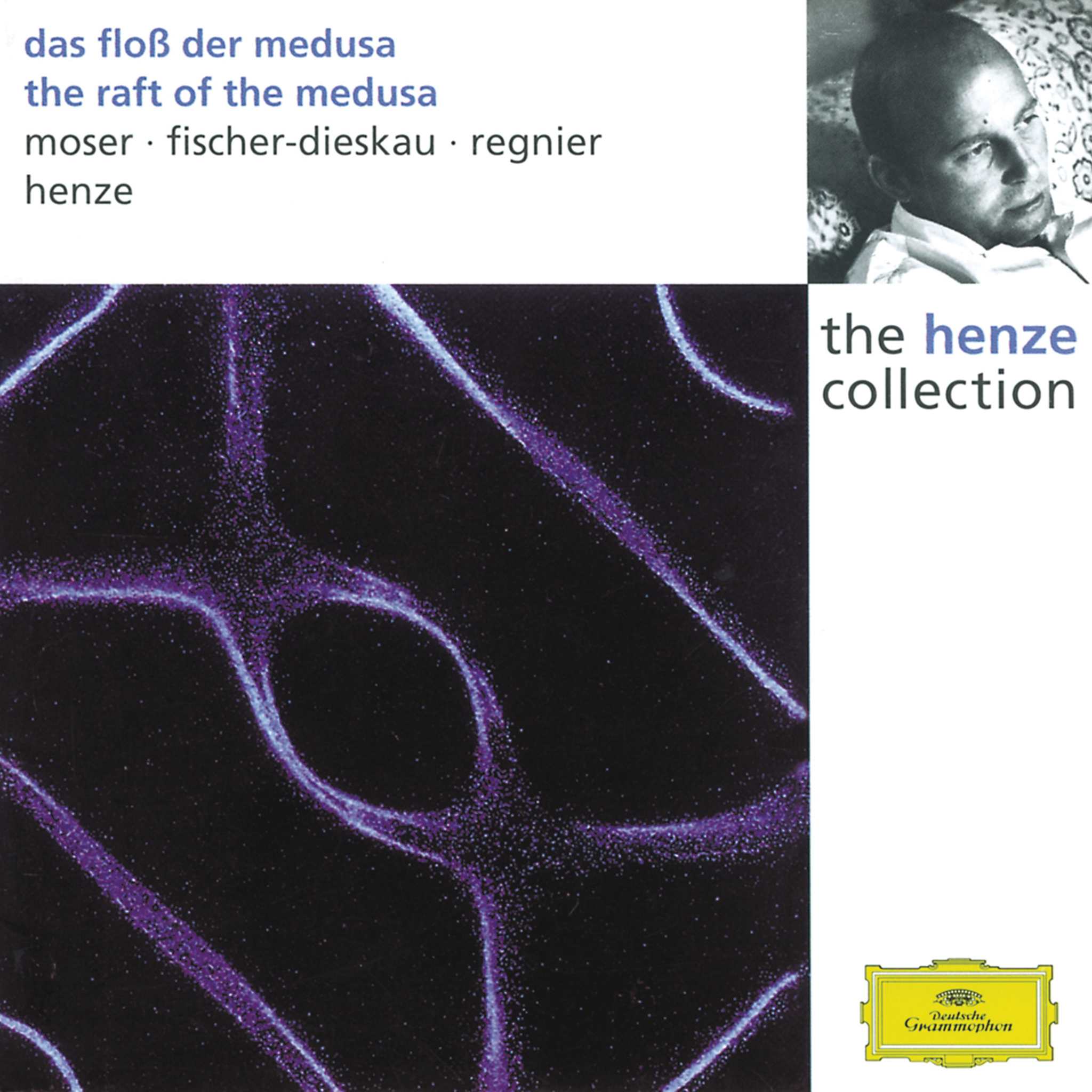
In the political upheavals of the late sixties, Henze took a clear stance: far left. Not left enough to throw stones, which led some to call him a salon Marxist. But left enough to dedicate his oratorio "The Raft of the Medusa" to the memory of the Cuban revolutionary Che Guevara, which in turn caused the North German Radio Symphony Orchestra and the RIAS Chamber Choir to cancel its premiere. Yet, a revolution with Henze would certainly have been fun. His equally politically inspired "El Cimarrón" for baritone, flute, percussion, and guitar is, in any case, a Caribbean-hued affair.
Perhaps it was precisely because he never solely composed that Henze was able to prove himself an undogmatic avant-gardist. He was always a great inspirer, whether with the "Cantiere internazionale d’arte" festival he founded in 1976 in Montepulciano, Tuscany, or the most important meeting point for modern opera, the Munich Biennale for New Music Theater, which he initiated in 1988. The breadth of thought and the artistic seriousness of this great individualist of German music remain to be rediscovered again and again. Hans Werner Henze died on October 27, 2012, at the age of 86 in Dresden, where shortly before, the first premiere of the 2012/13 season had taken place at the Semperoper with Henze's anti-war opera "Wir erreichen den Fluss – We come to the river," in the composer's presence.