Albums



AboutFranco Fagioli
»I suspect a voice like Franco Fagioli’s, with its three-octave range, comes as close as is possible today to the magnificent combination of brilliance, suppleness, and power of the great castrati.« Gramophone in its review of Serse, February 2019
For an exceptional artist like Franco Fagioli, the immensely challenging arias in Baroque and early Bel Canto opera pose little difficulty. Fagioli is precisely the singer who possesses the necessary interplay of technical agility, tonal variety, and vocal range to triumph in these works. He is not only considered one of the finest Handel singers of our time but also specializes in Mozart and roles originally written for castrati. The Argentine singer's abilities are praised by critics worldwide and attract throngs of listeners eager to experience this artist who masters the spectacular runs, leaps, and embellishments of even the most difficult bravura pieces. He has worked with the most esteemed conductors, such as Nikolaus Harnoncourt, René Jacobs, Marc Minkowski, Riccardo Muti, Christophe Rousset, Riccardo Minasi, Emmanuelle Haïm, Diego Fasolis, Giacomo Sagripanti, Leonardo García Alarcón, and George Petrou. He also performs regularly with Il Pomo d’Oro and Armonia Atenea. In July 2015, he became the first countertenor ever to be signed by Deutsche Grammophon.
Franco Fagioli was born in San Miguel de Tucumán, northern Argentina. He received piano lessons at the Music Institute of Tucumán and then studied singing, first in his hometown and later at the Instituto Superior de Arte, the training center of the Teatro Colón in Buenos Aires. The already impressively mature young interpreter achieved his breakthrough when he won the 10th International Singing Competition "Neue Stimmen" of the Bertelsmann Foundation in October 2003.
Fagioli soon demonstrated his unusual talent with a series of important opera debuts: in 2005, he sang the title role in Handel's Giulio Cesare at the Zurich Opera House with great success. He has since embodied this role in productions around the world. In 2007, he made his debut at the Salzburg Whitsun Festival under Riccardo Muti, and his US debut came in 2010 with a triumphant interpretation of the title role of Cavalli's Giasone at the Chicago Opera Theater. Fagioli's versatility and virtuosity were again evident in 2012 at his debut at the Salzburg Summer Festival, where he displayed the rich lower registers of his voice in the challenging role of Andronico in Handel's Tamerlano.
In recent years, he has made his debut at the Royal Opera House, Covent Garden as Idamante in Idomeneo (November 2014), at the Aix-en-Provence Festival as Piacere in Il trionfo del tempo e del disinganno (2016), at the Opéra de Paris and the Nationale Opera in Amsterdam in the title role of Cavalli's reconstructed opera Eliogabalo (September 2016), and at La Scala in the first production of Tamerlano at that house ever (September 2017). In September 2018, he appeared as Ruggiero in Alcina for the first time at the Hamburg State Opera, and in July 2019, he made his debut at the Bavarian State Opera as Nerone in Agrippina.
He is now regularly heard at major international opera houses and important festivals. His roles include Handel's Serse, Ariodante, Riccardo Primo, Poro, Teseo, and Bertarido (Rodelinda), Mozart's Sesto (La clemenza di Tito) and Cecilio (Lucio Silla), as well as Vinci's Arbace (Artaserse), Rossini's Arsace (Aureliano in Palmira), Pergolesi's Farnaspe (Adriano in Siria), and Zingarelli's Romeo (Giulietta e Romeo).
In recent years, Fagioli has participated in a number of complete opera recordings, including Artaserse; the world premiere recordings of Caldara's La concordia de’ pianeti (as Apollo) for Archiv Produktion, as well as Hasse's Siroe (as Medarse) and Vinci's Catone in Utica (as Cesare) for Decca; and Adriano in Siria (as Farnaspe) also for Decca.
Franco Fagioli's partnership with Deutsche Grammophon began in September 2015 with the release of Gluck's Orfeo ed Euridice, followed in September 2016 by his first solo recording for DG, an album of Rossini arias, created in collaboration with Armonia Atenea and George Petrou. Both albums received widespread critical acclaim. His second solo album, a program of Handel arias recorded with Il Pomo d’Oro and Zefira Valova, was released in January 2018. ClassicsToday concluded: "[These are] 80 minutes of grand opera and all that the term encompasses, with deeply felt slow arias expressing pain and love, sung with a soft, round tone and seamless legato, and stormy, fast arias with their themes of revenge or anger, hurled out with sharp consonants."
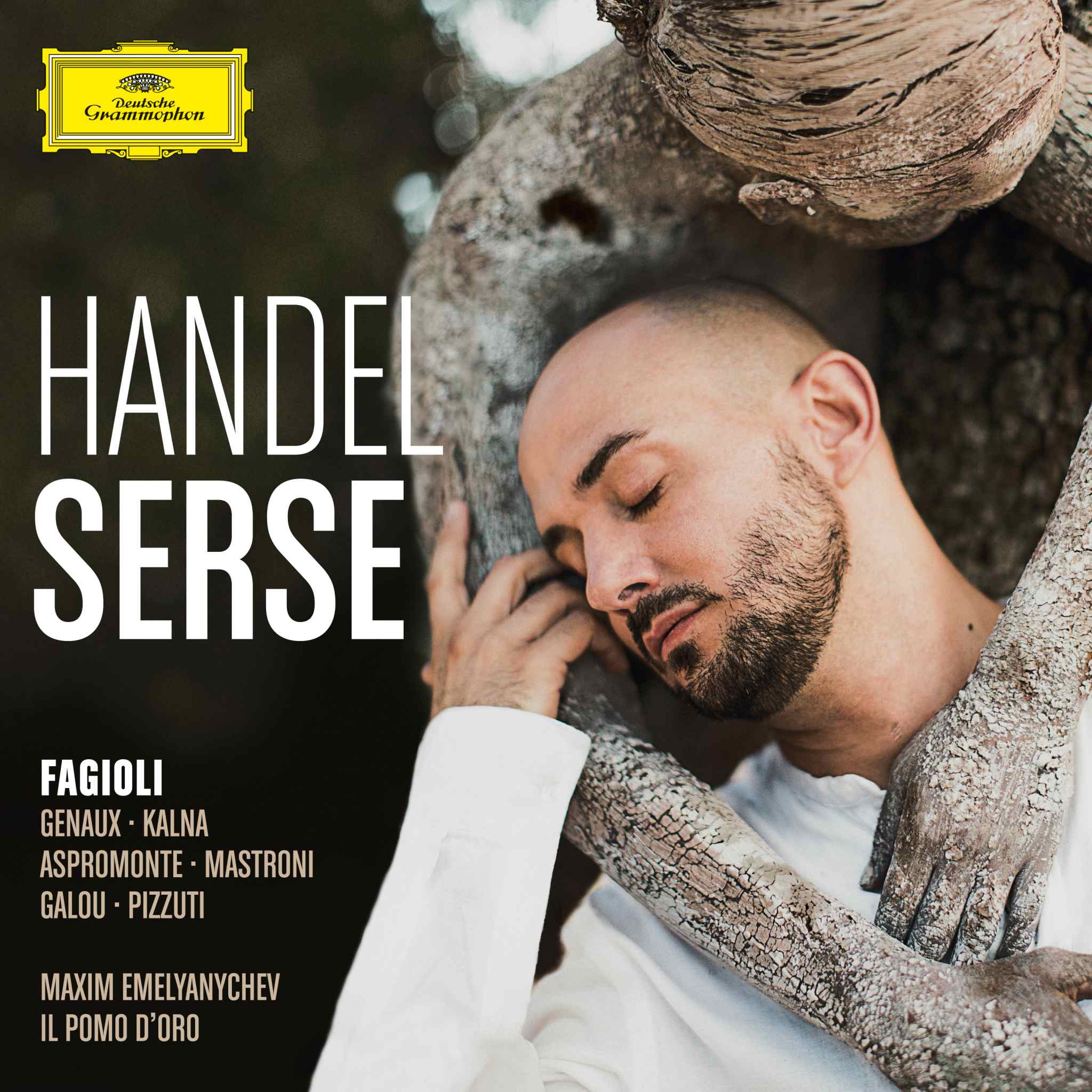
Fagioli then broke new ground by becoming the first countertenor to record the title role in Handel's Serse. Released in November 2018, the recording also received an enthusiastic response from critics. Gramophone praised his "magnificent portrayal of the lovesick, capricious king" and added that he "rightly dominates this new complete recording." Limelight magazine highlighted how the "excellent countertenor Franco Fagioli... manages to portray Serse's dignity as well as his ridiculousness with his sonorous, infinitely flexible voice."
The singer's latest solo album, Leonardo Vinci – Veni, Vidi, Vinci, will be released on May 8, 2020. Fagioli's partners are again Il Pomo d’Oro and Zefira Valova, and he has compiled a program of arias by one of the masters of Neapolitan opera. These include no fewer than seven world premiere recordings from operas such as Il trionfo di Camilla, Gismondo re di Polonia, and Medo.
Highlights of the 2018/19 season included concert performances of Serse in Ljubljana, Vienna, Paris, London, Lisbon, Toulouse, and Essen, as well as a staged production of the opera at the Handel Festival Karlsruhe; Handel recitals with the Venice Baroque Orchestra in Japan; recitals in France and Great Britain with music by Handel and Vinci, accompanied by Il Pomo d’Oro; performances of Pergolesi's Stabat Mater with Cecilia Bartoli and Cappella Gabetta in Switzerland and at the Salzburg Whitsun Festival; concert performances of Handel's Agrippina in Luxembourg, Madrid, Barcelona, Paris, and Lisbon; and a staged production of this opera at his debut at the Bavarian State Opera.
Fagioli began the 2019/20 season with further performances of Agrippina, this time at the Royal Opera House, Covent Garden, before portraying the title role of Rossini's Sigismondo at the Festival Opera Rara in Krakow (January 2020). His debut at the San Francisco Opera as Arsace in Handel's Partenope is planned.
His performances and recordings have received many awards and accolades. In 2010, the Italian magazine L’Opera named him "Singer of the Year," and the following year, he became the first countertenor in 30 years to receive Italy's highest musical honor, the Premio Abbiati. In May 2018, the Association of Argentine Music Critics named him "Argentine Singer of the Year" (2017). A month later, Handel Arias was awarded the German Record Critics' Award in the "Classical Song and Vocal Recital" category.
3/2020